
South Korea’s Ministry of Science and ICT and the Korea Atomic Energy Research Institute said on Feb. 13 they had secured all key component technologies for a gallium-68 generator, laying the groundwork to localise radiopharmaceuticals used to diagnose intractable cancers.
Gallium-68, a radioisotope, is used in positron emission tomography (PET) to diagnose intractable cancers such as prostate cancer and neuroendocrine cancer. Its half-life is 68 minutes, making a gallium-68 generator essential for stable supply. South Korea has relied entirely on imports because it has not secured key technologies.
Key component technologies for a gallium-68 generator include technology to produce the raw material germanium-68 and adsorption material technology that adsorbs germanium while selectively eluting gallium-68. The Advanced Radiation Research Institute at KAERI secured 30 MeV cyclotron-based germanium-68 production technology through a Ministry of Science and ICT support programme. It has now also succeeded in developing the adsorption material.
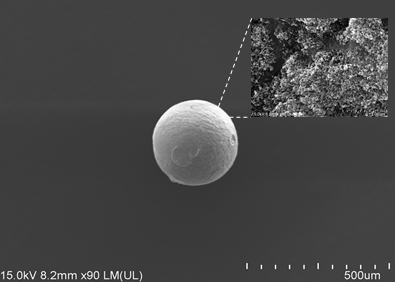
The researchers produced micro-sized particles using chitosan, a natural substance, and a titanium precursor, then heat-treated them to develop an adsorption material with stronger binding. Tests showed gallium-68 elution efficiency of about 70 percent, similar to leading global products. One elution can produce radiopharmaceuticals for six patients, and the material has durability allowing use for 1 year, about twice as long as imported products.
Using gallium-68 eluted with the developed material, the researchers conducted a preclinical test with Bundang Seoul National University Hospital on a radiopharmaceutical for prostate cancer diagnosis. They verified its effectiveness by obtaining tumour images. The technology has completed domestic and overseas patent registration, and a technology transfer to a South Korean company is expected to be pursued.
 Jin-ho Lee (이진호)
jhlee26@d-today.co.kr
Jin-ho Lee (이진호)
jhlee26@d-today.co.kr