
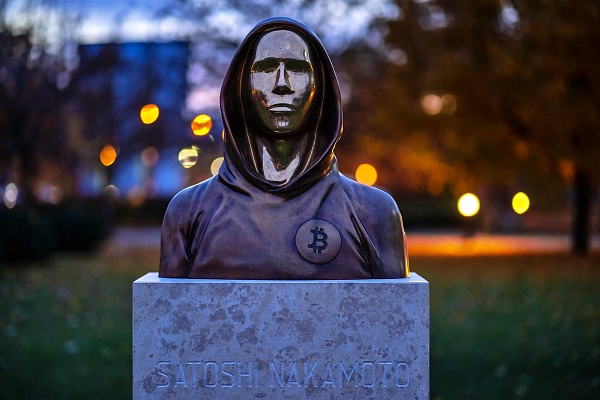
People claiming to be Satoshi Nakamoto, the creator of Bitcoin (BTC), appear regularly. Such claims always generate buzz, but none so far is backed by decisive evidence.
On Feb. 10, blockchain outlet Cointelegraph reported that proving Satoshi Nakamoto’s identity ultimately boils down to a cryptographic problem. Bitcoin is a peer-to-peer currency system designed to function without trusting people. Under that structure, identity can be proven only by whether someone controls the private key, not by documents or testimony.
The key to proving identity in Bitcoin is showing actual control of the private key for early Bitcoin addresses. The most standard method is to generate a message signature using that private key and publish it so anyone can verify it. Unlike other methods open to interpretation, the result is clear, but no one has tried it so far.
Many names have been mentioned as possible Satoshi candidates, but not many people have publicly claimed to be Satoshi. Craig Steven Wright repeatedly claimed to be Satoshi, but a ruling by the High Court of England and Wales explicitly concluded he was not, weakening his claim. Dorian S. Nakamoto, identified by Newsweek in 2014, immediately denied it. Hal Finney, known as an early Bitcoin developer, also denied the speculation during his lifetime. Nick Szabo has also consistently said he is not Satoshi.
The most realistic proof would be to sign a public message with a private key linked to early 2009 blocks, a period known to be connected to Satoshi’s mining activity. A stronger method cited is an on-chain transaction that actually moves bitcoin from an untouched wallet from the so-called Satoshi era. Even a single on-chain move could resolve most doubts.
But such actions come with real-world burdens. Side effects could be unavoidable, including global attention, threats to personal safety, tax, legal and regulatory risks, and market turmoil driven by fears of large-scale selling. Some interpret that since the “most certain proof” could also be the “most destructive action,” even the real Satoshi might find it more reasonable to stay silent.
In the end, proof that convinces the world must be public, reproducible by anyone, and directly linked to keys from the Satoshi era. Critics point out that approaches in which some claimants show materials only to a limited number of people, or present signatures created with keys generated later, are unlikely to meet that standard.
 Yoonseo Lee
yslee@d-today.co.kr
Yoonseo Lee
yslee@d-today.co.kr