
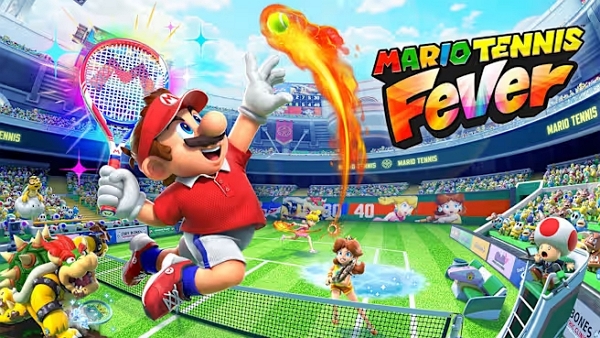
Nintendo is stepping up its push to get ahead in the global games market in the Switch 2 era, with a strong lineup of new titles led by Mario Tennis Fever and a strategy to deepen content. The move goes beyond a simple device replacement. It is seen as a strategy to minimise gaps during the hardware transition by building a solid software supply system and securing the platform’s long-term stability.
On Feb. 10, local time, overseas media including The Verge and TechRadar reported that Nintendo is rolling out a “two-track” strategy to help Switch 2 settle into the market. It is moving away from a vertical structure centred on major intellectual property and balancing mid-sized titles with performance upgrade content for existing hits. Mario Tennis Fever, due for release on Feb. 12, is a key anchor of the strategy. It is being reviewed as setting a high point for arcade sports games with flashy power-up elements, a series-record roster of 38 characters and unconventional mixed rules.
The title adds strategic depth through an evolved “Fever Racket System” compared with the previous game. Users can use surreal special effects such as fire, ice and shadow clones to quickly turn a match around, and can also make tactical choices by alternating between two rackets. Some critics point to disappointment that the single-player Adventure mode is short and feels like a tutorial. Strong multiplayer features spanning online ranked matches and local co-op play are offsetting that, and it is expected to establish itself as an early killer title for Switch 2.
Mario Tennis Fever is also serving as a bridge to fill the gap between major upcoming releases. A broad mid-tier lineup is waiting in the wings, including Pokopia, a Pokemon spinoff slated for 2026, Tomodachi Life: Dreams Come True, Yoshi and the Mysterious Encyclopedia, and the anticipated strategy RPG Fire Emblem: Fortune’s Weave.
Nintendo is also rolling out upgrade patches that maximise hardware performance for existing Switch bestsellers Animal Crossing: New Horizons and Super Mario Bros. Wonder, aiming to prevent existing fans from leaving and maximise the effect of bringing in new users.
Stronger partnerships with third parties are also a key driver supporting Switch 2’s success. Nintendo Direct recently revealed that global blockbuster franchises including Fallout, Final Fantasy VII Rebirth and The Elder Scrolls IV: Oblivion Remastered have been added to the Switch 2 lineup.
Capcom’s Resident Evil Requiem, set for release on Feb. 27, is due to launch simultaneously on PS5, Xbox and PC. That suggests the company has fully overcome a weakness of the previous system, where third-party blockbuster releases were delayed due to hardware limitations.
Nintendo President Shuntaro Furukawa (후루카와 슌타로) recently stressed at an earnings announcement: “The most important thing during a hardware generational shift is uninterrupted releases of new titles and maintaining points of contact with users.” Industry experts analyse that Nintendo is evolving Switch 2 beyond a simple game console into a huge comprehensive entertainment platform by maintaining the impact of its own IP while sharply expanding support for third-party and indie games.
This multi-pronged content strategy is expected to help Switch 2 gain an advantage in the global console war and become a strong foundation for leading the market for years to come.
 Kyungmin Hong
hongm@d-today.co.kr
Kyungmin Hong
hongm@d-today.co.kr