
The government has presented 'K-Science' as one direction for its science and technology research and development (R&D) policy. It aims to create a world-leading science and technology paradigm based on Korea’s own data and research fields.
On March 12, the Ministry of Science and ICT convened the 80th steering committee meeting of the National Science and Technology Advisory Council and reviewed and approved a draft '2027 national R&D investment direction and standards' that includes the plan.
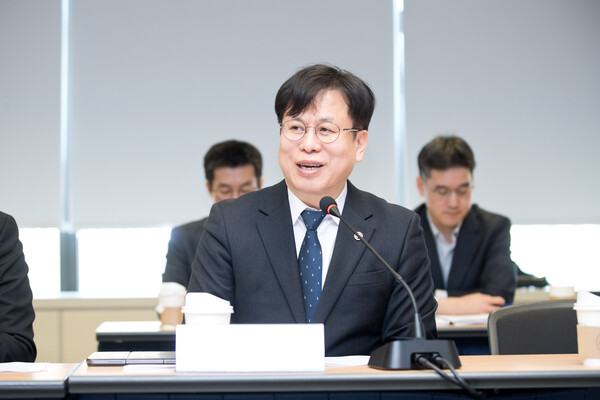
Park In-gyu (박인규), head of science and technology innovation at the ministry, said at a briefing that if South Korea’s R&D investment had so far been driven by global competition, it now needs to identify areas led by Korean scientists and that Korea can do best.
K-Science policy to reflect Korea’s unique environment
The draft 2027 national R&D investment direction and standards includes the K-Science policy. The science and technology innovation office said existing R&D policy has been pursued with a focus on achieving goals, which has limited expansion into a storytelling-based science culture that the public can easily relate to.
K-Science refers to a new science and technology paradigm combined with Korea’s unique history, culture and environment. Its goal is to lead global research and create research areas that move ahead of other countries. The policy aims to foster research fields led by Korean scientists, as Woo Jang-choon developed seedless watermelons and Jane Goodall became a symbolic figure in chimpanzee research in Britain.
Park stressed that Korea’s data and historical records can themselves be important assets for scientific research, and that systematically identifying research areas where Korea has strengths is the core of K-Science. The ministry plans to build an agenda pool centered on projects proposed by each ministry and, after expert review and consultations, to flesh out a K-Science strategy in the second quarter of this year.
Expanding R&D investment focused on AI and strategic technologies
It will continue concentrated investment in strategic technologies. It will step up efforts to expand AI use across the whole population, drive a nationwide AI transformation and accelerate a push to become one of the world’s top three AI powers based on an AI full stack. It will also strengthen support to secure innovative technologies in advanced bio, quantum and space, aviation and maritime fields.
In defense, it plans to pursue both innovation in the K-defense industry and stronger defense capabilities through a Spin-On approach that quickly applies advanced private-sector technologies. It will also expand investment in cybersecurity technology to prepare for new types of threats, pursue the building of an energy highway and push an energy transition centered on renewable energy.
Strengthening the competitiveness of key industries that drive economic growth is also a major investment direction. It will pursue technology development in core and advanced areas such as semiconductors and displays, advanced robots and manufacturing, next-generation communications, advanced mobility and secondary batteries, based on a division of roles between the public and private sectors. The government plans to focus on long-term, high-difficulty research areas such as compound and power semiconductors and advanced packaging technologies, while the public and private sectors will cooperate to secure urgent strategic technologies such as AI semiconductors.
Overhauling the R&D system to restore the research ecosystem
It will also expand investment in areas where the public can directly feel the effects of R&D investment. R&D for disaster safety response to floods and wildfires will apply excellent technologies across various fields. It will continue investment in public-facing R&D aimed at overcoming social issues such as low birth rates and an aging population and improving daily life.
In basic research, it plans to increase the number of projects and raise the use of shared personnel and infrastructure. It will also review university block funding to strengthen institutional research capabilities and follow-up support measures so failed research can become an asset for innovation. Government-funded research institutes will be fostered as performance- and mission-oriented research hubs by gradually abolishing the project-based system (PBS), expanding mission-centered strategic research programs and securing talent while improving the treatment of regular workers.
To support the growth of small and venture businesses, it will expand cooperation among ministries and projects for technology transfer and commercialisation scale-up, and strengthen investment in youth startups and the commercialisation of public technologies. It also plans to diversify investment methods, including competition-based, private-investment-linked and investment-type R&D.
To improve investment effectiveness, it will also push to upgrade the government R&D investment system. It plans to secure fiscal room through performance-based prioritisation in the budget allocation and adjustment process and, through inter-ministry consultations, restructure R&D projects to reinvest where it is most needed.
After the abolition of preliminary feasibility studies, it will classify large new R&D projects into research-type and infrastructure-build types. Large research-type R&D projects will be quickly reviewed and reflected in the budget by technology-field expert committees under the science and technology advisory council. Large infrastructure-build R&D projects will be closely reviewed through a full life-cycle management system with stage-by-stage screening. The innovation office plans to thoroughly check and manage government R&D projects year-round, from planning through execution.
The investment directions approved on the day will be notified to the economic planning and budget office and related ministries, and will be used as basic guidelines for ministries’ R&D budget requests in May and for the allocation, adjustment and compilation of the 2027 government R&D budget starting in September.
Park said it is now time for R&D investment to bear fruit in outcomes the public can feel, such as becoming one of the world’s top three AI powers, building an energy highway, realising Startup Korea and revitalising regional economies. He added that he will bring together the capabilities of the public and private sectors, including more than 30 central administrative agencies, local governments, companies, universities and research institutions carrying out government R&D projects.
 Jin-ho Lee
jhlee26@d-today.co.kr
Jin-ho Lee
jhlee26@d-today.co.kr