
Telecommunications and broadcasting are part of everyday life. Behind them is an ongoing technology race and industrial change that is not always visible. "Shintongbangtong" is a series that explains telecommunications and broadcasting technology and market trends in an easy and engaging way. It looks at the latest technology, policy and market shifts, adding context from the field.
[DigitalToday reporter Jin-ho Lee (이진호)] With the shift to sixth-generation mobile communications, or 6G, nearing in the artificial intelligence era, smart glasses are drawing attention as a game-changer that could reshape the telecom industry. Interest is shifting beyond the hand holding a smartphone to next-generation devices worn on the eyes. The road is still long, but the industry broadly sees smart glasses as at least a disruptive force in the industrial field. Why should you pay attention to this small device?
◆ Smart glasses in focus as an AI-era game-changer
Smart glasses are eyewear-shaped wearable devices that combine a display, camera, sensors and communications functions. When worn, they can overlay digital information through the lens, show what someone is saying, and even instantly translate foreign languages into the user’s language, among other functions.
Experts expect smart glasses to be widely used at hazardous industrial sites such as factories. Workers can keep both hands free while checking real-time information. Uses include a worker on a roof sending what they see to a manager without using their hands, or displaying on-site information on the lens to help with tasks.
They can also be useful for general users. People can bring up maps to find their way in unfamiliar places or translate a foreign-language menu immediately, using AI to make visual information easier and more accurate to use. That has led to assessments that they could become a new personal computing platform after smartphones.
Market forecasts are also positive. Smart Analytics Global (SAG), a global market research firm, expects global smart glasses sales this year to surge more than fourfold from last year’s $1.2 billion to $5.6 billion. It also analysed that shipments will more than triple to 20 million units this year from about 6 million units last year. By 2030, shipments are expected to reach 75 million units. That would mean more than 1 out of every 100 people worldwide uses the device.
Meta has planted its flag first in the smart glasses market with its Meta Ray-Ban series. China’s Alibaba has introduced its Qwen glasses. Apple is also known to be developing a similar product. Google is also reported to launch its first smart glasses product with AI this year. In South Korea, Samsung Electronics plans to unveil smart glasses within the year.
◆ Rising uplink traffic to drive shift to 6G
So why is the telecom industry paying attention to smart glasses? It is data traffic. Smartphones are dominated by downlink traffic such as video viewing, but smart glasses have the feature of sharply increasing uplink traffic by sending real-time data through cameras and sensors.
For example, analysing what a user is seeing with AI requires continuously sending large amounts of data to the cloud. 6G can serve as a next-generation network suited to such demand. Based on ultra-fast data transmission and ultra-low-latency communications, 6G becomes a tool to accelerate the spread of smart glasses. The more widely smart glasses are adopted, the bigger demand for 6G will become. Global equipment makers are already preparing. Cristiano Amon (크리스티아노 아몬), chief executive of Qualcomm, said at MWC26, which recently concluded, "If 5G focused on download speed, 6G must maximise uplink for 'seeing AI'."
Some also point out that technical challenges remain before smart glasses can become mainstream more quickly. The biggest concern is AR display technology and device performance. Most smart glasses currently rely on smartphone apps or external devices for computing power, limiting them as fully standalone devices. Power efficiency and heat are also issues to solve, given the need to fit batteries, sensors and communications modules into a small eyewear form factor.
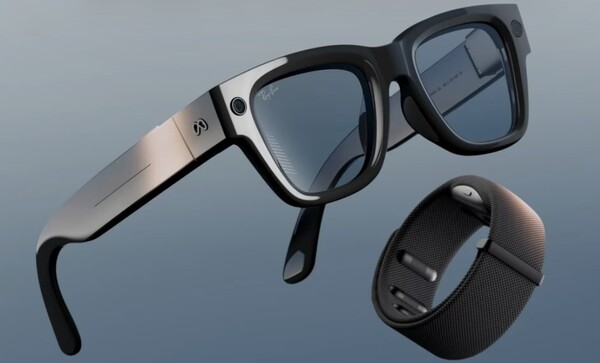
Many assess that AI-based functions such as real-time command recognition and object recognition have also not reached fully stable levels. Meta showcased a Meta Ray-Ban display at MWC this year that incorporated a "neural band" that controls the device using muscle electrical signals, but it did not appear to recognise user commands 100 percent. High accuracy and stability are required for industrial use, and analysis suggests current technology is at an early stage. Security issues such as illegal filming and personal information leaks also need to be addressed.
Even so, the industry sees smart glasses as likely to become a core interface in the AI era. While smartphones are devices used in the hand, smart glasses can provide a new user experience as computing devices used through the eyes.
Ultimately, smart glasses are likely to establish themselves as a new digital platform at the point where AI and 6G, the next-generation communications network, combine. Limitations still exist, but as many global companies are showing interest, competition in the related ecosystem is expected to intensify. The era of smart glasses is already something to look forward to.
 Jin-ho Lee
jhlee26@d-today.co.kr
Jin-ho Lee
jhlee26@d-today.co.kr