
Puget Systems, which manufactures PCs and workstations using a build-to-order (BTO) approach, released hardware reliability data for 2025. The report analyses failure rates by component, from central processing units (CPUs) and graphics processing units (GPUs) to memory, storage and power supply units (PSUs), based on shipped systems and a review of assembly processes and customer feedback. Online media outlet Gigazine reported the details on Feb. 5 (local time).
In CPUs, Intel's Xeon W-2500 and W-3500 series recorded the highest reliability, logging not a single failure in 2025. That displaced AMD's Threadripper series, which ranked first in 2024. Among consumer desktop CPUs, Intel's Core Ultra 7 265K posted a low failure rate of 0.77 percent, the best result among individual models. Across product lines, the gap was small between AMD's Ryzen 9000 series at 2.52 percent and Intel's Core Ultra series at 2.49 percent, and Puget Systems assessed that it was "difficult to determine a statistically clear winner."
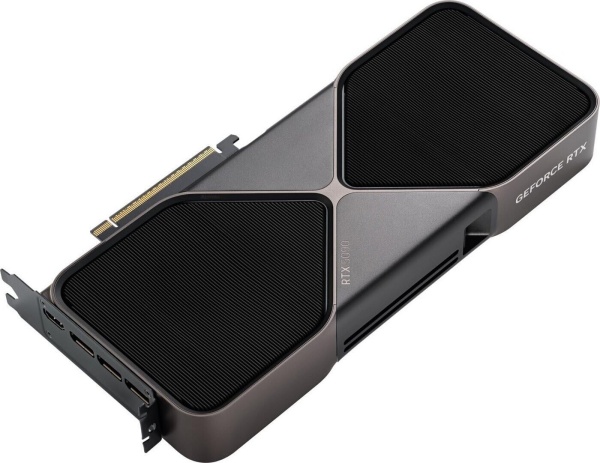
In GPUs, Nvidia's strength stood out. Among consumer graphics cards, Nvidia's GeForce RTX 50 series Founders Edition had the lowest failure rate at 0.25 percent. It was followed by the Asus GeForce RTX 50 series at 0.40 percent and the PNY GeForce RTX 50 series at 0.45 percent. In the professional graphics card market, the Nvidia RTX Ada Generation and RTX PRO Blackwell series generally maintained stable performance, but the high-power RTX PRO 6000 Blackwell Workstation Edition recorded an unusually high failure rate. Taking sales volume into account, the analysis found Ada Generation showed slightly higher reliability overall than Blackwell.
Motherboards are seen as an area with higher failure potential because they structurally contain many components, but some models proved highly stable. Gigabyte's B860M AORUS ELITE WIFI6E ICE had no failures across all 100 units sold in 2025, and Asus' TUF B850M-PLUS WIFI recorded only 1 failure over the year, maintaining high reliability following the previous year's model.
In memory, quality remained stable for most of the year despite supply shortages and a sharp rise in prices toward the end of 2025. More than 95 percent of the memory used by Puget Systems came from Kingston and Micron, with Kingston posting a 0.19 percent failure rate and Micron 0.27 percent. In particular, Kingston's ValueRAM DDR5-5600 32GB was rated the most stable desktop UDIMM, with a failure rate of 0.09 percent.
In storage, Samsung's 870 QVO 8TB SATA SSD posted a 0 percent failure rate in 2025, showing the highest reliability, followed by Kingston's KC3000 M.2 SSD at 0.22 percent. In PSUs, Corsair's SF1000 Platinum recorded no failures despite more than 200 units sold, and the Super Flower LEADEX series also demonstrated stability with a low failure rate of 0.47 percent.
Puget Systems said in the report, "The more complex the component, such as a motherboard, the higher the likelihood of failure, but most issues are filtered out during pre-shipment testing," and added, "Even if component brands are changed depending on market conditions, there is no major impact on overall system reliability."
 Jinju Hong
hongjj@d-today.co.kr
Jinju Hong
hongjj@d-today.co.kr