
South Korea's KOSPI has thrown open the door to the 5,000 era. It broke through 4,900 in early January to set a record high, then jumped past 5,200 in just over two weeks. Still, there appears to be a lack of "belief" in local shares. The index is hot, but retail investor outflows look unusual.
The Korea Securities Depository shows domestic investors' net purchases of U.S. stocks in January topped $5.3 billion, up more than 30 percent from the same month a year earlier. Retail investors are selling South Korean shares day after day, extending a run of net selling on the largest scale on record.
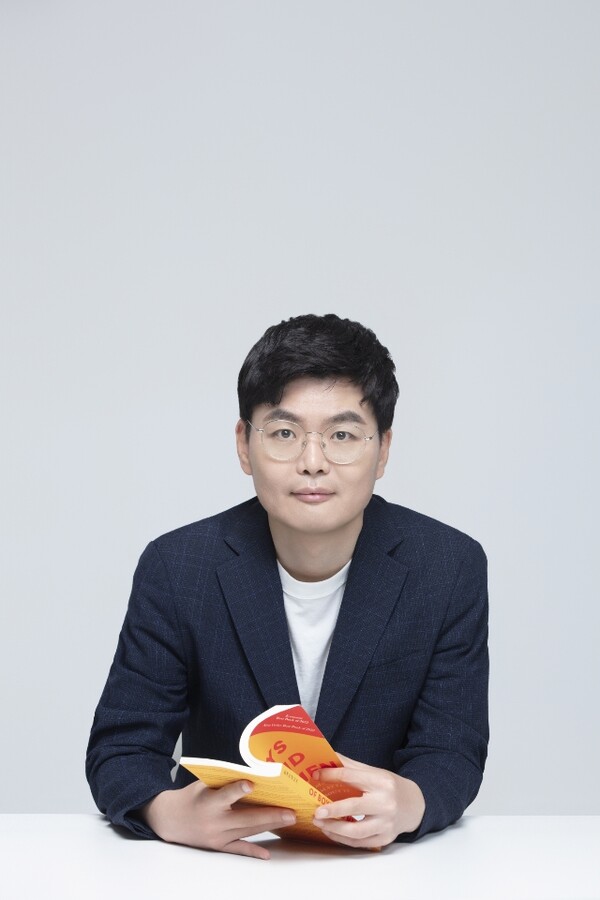
But Park Seung-young (박승영), head of the investment strategy team at Hanwha Investment & Securities' research centre, diagnosed the current situation in an interview with DigitalToday as "a smart process of asset accumulation rather than a simple departure".
◆ Not leaving local shares, but moving to ETFs
Park first corrected claims that "retail investors are leaving the local market". The headline statistics on retail net selling are only an optical illusion, he said. He stressed that investors should focus on the moves of the "financial investment" category among supply and demand players.
"Last year the financial investment category bought nearly 30 trillion won net in domestic shares, and the real owners of that huge pool of money are retail investors," Park said. "They have only moved from 'direct investment' of choosing individual stocks to 'indirect investment' through retirement pensions or individual retirement pensions (IRP)."
If individuals sell stocks directly and use the proceeds to buy ETFs (exchange-traded funds) in pension accounts, the supply-demand data are recorded as "retail selling, financial investment buying".
Park described this as "the source of buying has changed". He meant that speculative funds that once chased windfall gains with spare cash have shifted in nature into long-term pension assets for retirement preparation. That is also the backdrop to rapid growth in the domestic ETF market, whose size recently topped 300 trillion won.
◆ Foreigners driving the 5,000 era... holding companies key to value-up
As retail investors switch into ETFs, another main driver that lifted the index to the 5,000 level is foreigners. Goldman Sachs, in a recent report, diagnosed no signs of overheating in flows, saying South Korea's 12-month forward price-to-earnings ratio (PER) is still around its historical average.
Park agreed, saying retail direct investment markets did show signs of overheating, but foreign flows still have plenty of room. He put foreigners' investment criteria squarely on dividends and value. He analysed that a trend of rising payout ratios among South Korean companies is drawing foreign investors.
He pointed to holding companies as key beneficiaries of the government's "corporate value-up programme".
"Criticism that the South Korean market is concentrated in certain sectors such as semiconductors, defence and power is a natural phenomenon when you consider South Korea's role in the global supply chain," Park said. "But from a value-up perspective, you should keep an eye on holding companies that can structurally raise payout ratios."
He also stressed that investors should focus on solid holding companies that are likely to be included in the National Growth Fund or the value-up index. He called them the core of the value-up theme. By contrast, he kept a conservative view on financial holding companies that already have high payout ratios, saying, "There is not much room to further expand dividends."
◆ Separate taxation of dividends to drive valuation re-rating
Park predicted that the separate taxation of dividend income, passed at last month's plenary session of the National Assembly, would lead to a fundamental improvement in the constitution of South Korea's stock market. He said changes in corporate capital policy could make a re-rating of valuations across the KOSPI possible.
"Capital allocation by domestic companies responds sensitively to tax benefits or regulations," he said. "Introducing separate taxation of dividend income is a powerful policy that can change the assumptions used to calculate valuations in the domestic stock market as a whole."
If the tax burden falls, companies increase dividends and investors expand dividend stock investment, he said. He said a virtuous cycle could take hold and become a trigger to resolve chronic undervaluation.
But policy durability is key. "What matters is whether it can be made permanent, rather than the currently discussed three-year temporary implementation," Park said. "Uncertainty over the policy must be removed so companies can draw up long-term shareholder return plans and the resulting rise in valuations can be sustained," he added.
◆ Beware FOMO... take a long view
Park urged a wise investment posture suited to the KOSPI 5,000 era. He stressed that investors should most beware the FOMO phenomenon, the fear of missing out that appears when markets surge.
"The most important first principle for becoming rich is a mindset of not envying others," Park said. "The stock market must now change from a channel for corporate fundraising into a market for individuals' asset accumulation, and investors should also take a long view accordingly."
As a concrete method, he presented a "four-split benchmark portfolio". The strategy is to avoid concentrating assets in any single area and allocate 25 percent to South Korean stocks, 25 percent to U.S. stocks, 30 percent to real estate including REITs, and 20 percent to alternative assets such as bitcoin.
"The key is to change the structure in which 60 percent of South Korean household assets are skewed toward real estate into one centred on financial assets," Park said. "A balanced portfolio is the surest way to keep moving toward the era after 5,000 without being shaken even in volatile markets."
 Sangyeop Oh
yub@d-today.co.kr
Sangyeop Oh
yub@d-today.co.kr