
The KOSPI has extended a sharp rally after breaking above the 5,000 mark for the first time, but domestic investors’ enthusiasm for overseas stocks is not easing. An assessment says the backdrop is a combination of the structural advantage of the U.S. artificial intelligence (AI) industry and distrust of the domestic market.
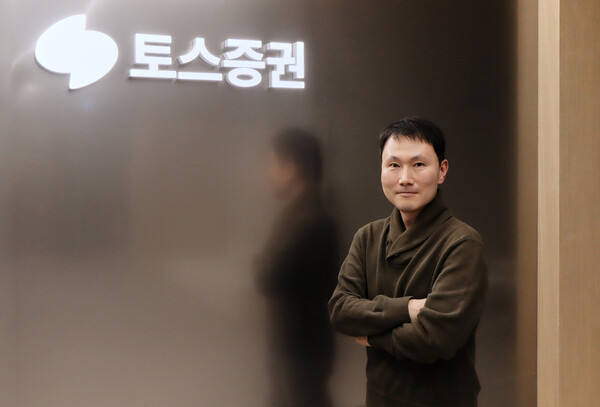
In a recent interview with DigitalToday, Lee Young-gon (이영곤), head of the research centre at Toss Securities, said money always flows to where higher returns are expected. Restoring trust that the domestic market is truly a place worth investing in is key, he said.
Overseas investment trend and limits of domestic policy
Lee defined the expanding share of overseas stocks not as a temporary tilt but as a structural trend that has continued since COVID-19.
He said the biggest driver of global equity markets is AI, and with key companies concentrated in the United States, funds are naturally heading there.
Lee said even buying domestically listed exchange-traded funds ultimately means investing in the U.S. S&P 500 and big tech. It is only the difference between direct and indirect exposure, and in broad terms it should all be seen as overseas investment, he said.
He said he agrees with the government’s policy direction of encouraging domestic investment, but added that direction alone is not enough.
Lee said the direction is right in seeking to shift money into stocks and corporate investment rather than real estate. He stressed that funds will return only if investors are given experience and trust that they can generate sufficient returns by investing in domestic companies.
AI is overheated, not a bubble; this year is about earnings verification
On global AI bubble arguments that swept the market late last year, he said the term bubble is not appropriate.
Lee said a bubble is froth without substance, but AI is already changing industrial structures and daily life and is actually generating money. If anything, overheated is a better term, he said.
He added that it is clearly a burden that companies have competitively invested even in areas that do not produce profits in the short term, pushing costs excessively higher.
He pointed to earnings as the key point to watch in global markets in 2026.
Lee said the past 2 to 3 years were a period when expectations lifted share prices, but now what matters is how quickly profits are recovered relative to investment. He said this year will be one in which big tech and AI-related stocks are scrutinised more closely on whether their earnings come in strongly enough to dispel market concerns.
Trump-Powell conflict will ultimately shape conditions for rate cuts
On the intensifying conflict between President Donald Trump and Federal Reserve Chair Jerome Powell, he said it will peak around the first quarter.
Lee said worries about damage to central bank independence will increase short-term market volatility, but considering Powell’s term ending and the process of selecting the next chair, voices favouring monetary easing could grow louder afterwards.
He added that even if the next chair reflecting Trump’s intentions takes the job, the Fed cannot move rates at will, but there is clearly room for a more dovish environment than now.
2026 semiconductors, robots and regional allocation strategy
On the backdrop to a sharp rise in domestic semiconductor shares, he said pessimism in 2025 was excessively strong.
Lee said Samsung Electronics and SK Hynix underperformed due to the industry cycle, but their competitiveness did not disappear. He said the key to the turnaround in earnings and share prices was that as supply shifted to higher value-added semiconductors in line with AI demand, supply of traditional memory such as DRAM tightened.
Lee said he sees the destination of AI as robots. He said direct equity investments by global big tech and owner families in humanoid companies are a very strong signal.
But given high volatility in individual stocks, he advised that a more realistic strategy is to diversify into ETFs that can bet on the whole industry, or into listed companies that hold stakes in unlisted robot firms.
On regional asset allocation, he said the key driver of the market rise is still U.S. AI, and urged maintaining a U.S.-centred strategy.
He said if diversification is needed, it is realistic to put South Korea as the top priority after the United States, then consider some emerging markets such as India. For now, he added, there is not much reason to meaningfully raise allocations to Europe or other Asia-Pacific markets.
Staggered, long-term buying is preferable to FOMO
He urged novice investors considering overseas investment to beware of FOMO, or fear of missing out.
Lee said jumping in with impatience after looking at recent market conditions and those around you reduces objective judgment and raises the probability of failure. He said it is necessary at first to approach with small amounts and staggered investing from a long-term perspective.
He added that it is preferable to build a feel for the market by using paper trading or stock-accumulation features focused on indices and blue chips, then gradually increase the weighting.
 Oh Sang-yup
yub@d-today.co.kr
Oh Sang-yup
yub@d-today.co.kr