
March is packed with key dates on the global semiconductor calendar. Nvidia’s GTC will unveil a next-generation AI chip roadmap. China’s annual parliamentary meetings will finalise a five-year plan for semiconductor self-reliance. Leadership reshuffle messages will emerge from shareholder meetings at Samsung Electronics and SK Hynix. The timing also overlaps with the announcement of memory fixed contract prices at the end of the first quarter, and is expected to be a watershed for judging industry conditions after the second quarter and the pace of demand recovery.
The first event drawing attention is Nvidia’s GTC 2026, to be held in San Jose, California, from March 16 to 19. The key is whether the company will unveil the next-generation AI chip "Feynman" that Chief Executive Jensen Huang (젠슨 황) has flagged. Specifications are also expected to be confirmed for the "Vera Rubin" GPU, slated for mass production in the second half, alongside Feynman, which is reported to use TSMC’s 1-nanometre-class process. Nvidia’s next chip roadmap is directly tied to HBM capacity per package and serves as a barometer for gauging the scale of benefits for South Korean memory companies.
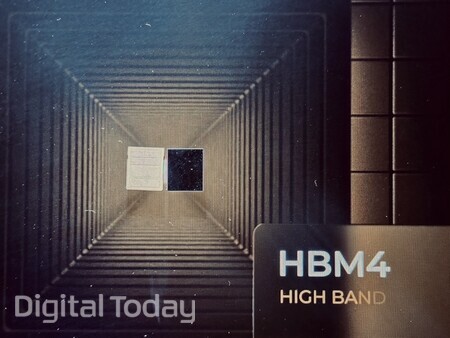
Samsung Electronics and SK Hynix will also take the GTC stage. According to the industry, Samsung Electronics will present next-generation high-bandwidth memory technologies such as HBM4, HBM4E and SOCAMM2. SK Hynix will show how HBM4 boosts system efficiency for large language model (LLM) systems. Both companies are moving into full-scale technology competition to secure the next-generation HBM supply chain.
China’s annual parliamentary meetings are also a variable. The National People’s Congress, opening in early March, will 발표 the "15th five-year plan (2026–2030)." With President Xi Jinping having stressed since the start of the year that "a breakthrough in homegrown AI chips" is a top priority, attention is on whether the government work report will spell out subsidy 규모 for expanding AI data centre infrastructure, disbursing the national semiconductor fund, and protecting supply chains for legacy semiconductors. With U.S. semiconductor restrictions on China continuing, the speed of China’s self-reliance drive could determine the direction of global supply chain reorganisation.
◆Will leadership reshuffles at the two memory giants’ shareholder meetings ripple through... and will memory prices hit an inflection point
The semiconductor industry is also watching messages from shareholder meetings of the two memory leaders. Samsung Electronics will hold its 57th annual general meeting of shareholders on March 18. The key agenda item is the appointment of Kim Yong-gwan (김용관), head of management strategy for the Device Solutions (DS) division, as a new internal director. Kim has overseen strategic planning across the semiconductor business and is read as a signal of management renewal to strengthen competitiveness in the HBM market and normalise the foundry business. Samsung Electronics currently has 3 internal directors: Jun Young-hyun (전영현), head of the DS division and vice chairman; Roh Tae-moon (노태문), head of the Device eXperience (DX) division and president; and Song Jae-hyuk (송재혁), chief technology officer for the DS division.
SK Hynix will hold its 78th annual general meeting of shareholders at its headquarters in Icheon, Gyeonggi Province, on March 25. Cha Sun-yong (차선용), head of the Future Technology Research Institute and chief technology officer, will be appointed as a new internal director. SK Hynix said it aims to "provide an opportunity to participate in major internal decision-making so that CEO candidates can develop companywide management insight." It is also notable that both companies are pursuing the deletion of clauses excluding cumulative voting and the introduction of electronic shareholder meetings as agenda items to amend their articles of incorporation.
Memory fixed contract prices are also expected to show an inflection point in March. According to market research firm DRAMeXchange, the average fixed contract price in February for a general-purpose PC DRAM product (DDR4 8Gb) was $13, up 13.04 percent from the previous month. It rose for 11 straight months to the highest level since the survey began in 2016. TrendForce said most DRAM suppliers and PC makers had completed first-quarter price negotiations by February, and the industry is watching whether prices will continue to rise. TrendForce said "spot prices have reached a satisfactory balance point for both buyers and sellers" and "the upward trend is likely to slow."
NAND flash is different. The average fixed contract price in January for a general-purpose product (128Gb MLC) jumped 33.91 percent from the previous month to $12.67, extending gains for 14 consecutive months. As suppliers focus production capacity on high-capacity 3D NAND, supply shortages for mature-process products such as SLC and MLC are worsening.
The key is the second-quarter fixed contract prices to be announced in late March. Whether the DRAM uptrend breaks and whether NAND strength holds will determine first-quarter profitability for South Korean memory companies and the direction of industry conditions after the second quarter. March, when HBM demand signals from GTC, semiconductor self-reliance policies from China’s parliamentary meetings, and capital expenditure stances confirmed at shareholder meetings pour out at once, is expected to be a turning point for first-half semiconductor investment decisions.
 Daegeon Seok
d2dg@d-today.co.kr
Daegeon Seok
d2dg@d-today.co.kr