
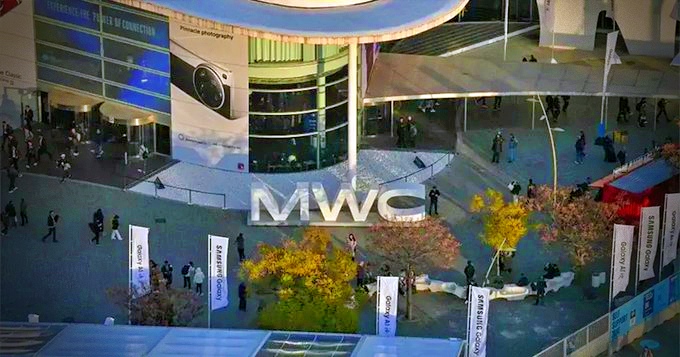
South Korea's Ministry of Science and ICT on Monday unveiled low-power artificial intelligence network technology developed by the Electronics and Telecommunications Research Institute (ETRI) and Yonsei University at Mobile World Congress (MWC) 2026, which opened in Barcelona.
A total of 199 South Korean companies, organisations and research institutes took part in MWC 2026 to showcase R&D成果 in 6G mobile communications, AI and satellite communications.
ETRI unveiled low-power base station software technology that can cut power consumption of base station equipment by more than 20 percent. Base stations account for 70 percent of total power use in mobile communications networks. AI algorithms predict real-time traffic and control resources to reduce wasted power. The technology applies the 5G-Advanced (5G-A) standard, an intermediate stage between 5G and 6G, and is designed as software-based and not tied to any specific vendor’s equipment.
The technology has secured 34 domestic and overseas patents and been reflected in 5 international standards, and it has been transferred to 2 small and medium-sized companies in South Korea. The ministry said it expected the technology to cut annual power operating costs for communications networks worth up to 1 trillion won by about 100 billion won. ETRI aims to raise the energy-saving target to 30 percent in the future by using domestically made AI chips, or NPUs.
Yonsei University, together with Singapore University of Technology and Design (SUTD) and U.S. company Viavi, developed large language model-based antenna control technology. The method has AI identify and predict network conditions in real time to switch antenna radio waves on and off or actively decide beam directions.
In tests, the LLM-based model improved data throughput by 95.7 percent and raised performance stability to 90 percent from 29 percent in environments with irregular signal periods, compared with existing reinforcement learning-based AI models. In abnormal network environments, it improved data throughput by 3 percent and performance stability by 12.4 percent. Yonsei University’s research成果 was displayed at the AI-RAN Alliance booth led by Nvidia and SoftBank, among others.
Choi Woo-hyuk (최우혁), director-general for Information Security and Network Policy at the ministry who attended the event, said, "Through close cooperation between the government, industry, academia and research institutions, we have secured core technologies that can lead the industry." He added, "We will actively support efforts from technology development to market entry to take the lead in the 6G and AI network industry."
 Seulgi Son
sageson@d-today.co.kr
Seulgi Son
sageson@d-today.co.kr