
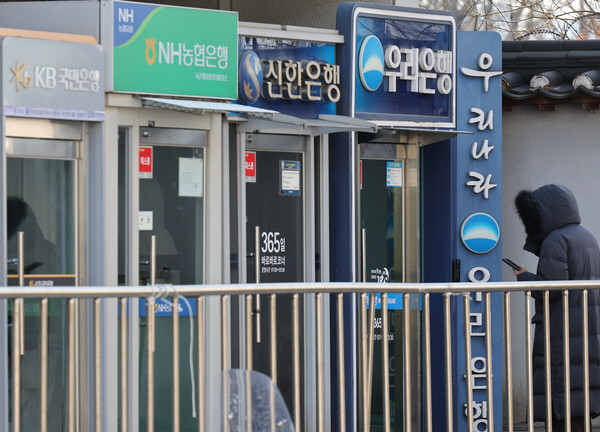
Dementia trusts have emerged as a new battleground for banks. Competition has begun to secure the so-called dementia money market by taking the lead in systems to protect, execute and manage inheritance of assets covering periods before and after the onset of dementia, beyond products for older customers.
The Presidential Committee on Ageing Society and Population Policy estimates dementia-related assets in South Korea at 172 trillion won last year and expects them to expand to 220 trillion won in 2030 and 351 trillion won in 2040.
As the number of people with dementia enters the era of 1 million, analysis suggests demand is structurally increasing to prevent asset freezes, fraudulent withdrawals and family disputes.
But individual guardianship and asset-management arrangements through lawyers and others have been criticised for high costs and complex procedures. Recently, banks have been putting trust-based solutions to the fore, using their accessibility as a strength. This market environment also drove banks to set up dedicated dementia organisations and roll out related products in succession this year.
PRE-DESIGNED TRUSTS AIM TO BLOCK ASSET GAPS
A common feature of recently launched products is "pre-design". They are designed so customers set the structure for how funds will be spent while healthy, and the structure then automatically operates when decision-making becomes difficult due to dementia and other conditions.
Shinhan Bank launched the "Shinhan SOL Mate Dementia Relief Trust" on Feb. 27 and introduced a structure under which a pre-designated trust manager supports financial transactions if health problems arise. Any individual aged 19 or older can 가입.
It is designed to minimise gaps in asset management by enabling not only payments for hospital bills, nursing care costs and taxes, but also reinvestment and operation management. In addition to cash, real estate and securities can also be set as trust assets.
Another feature is that it reduces exposure to financial fraud by restricting the use of funds for purposes other than those intended and making transactions with verified counterparties the principle. It is also preparing measures to strengthen safeguards by combining artificial intelligence-based detection of suspicious transactions with guardian notification functions.
KB Kookmin Bank's "KB Golden Life Dementia Relief Trust", released in December last year, also focuses on pre-planned fund management. If a customer designates an agent for payment requests and sets an asset-use plan while healthy, assets are transferred to a pre-selected account when a severe dementia diagnosis is made.
It provides stable payments of medical expenses, caregiving costs and living expenses to designated beneficiaries and links to post-death asset transfers through a testamentary substitute trust structure. The minimum 가입 amount is 10 million won, and customers aged 40 or older can join.
DEDICATED UNITS ADDED AS BANKS COMPETE ON ADVICE PLATFORMS
Beyond products, organisational responses are also being strengthened. Hana Bank set up the "Dementia Relief Financial Center" last year, the first dedicated specialised organisation in the financial sector.
It offers step-by-step consulting, including trust design for the pre-dementia stage, use of the voluntary guardianship system, support for implementing the adult guardianship system after dementia, and 생활 support related to care and nursing. It supplemented expertise by linking with external specialist institutions such as the Korea Guardianship Association and Onyul, and had all private bankers complete dementia-partner training at the Central Dementia Center. Offering free consultations regardless of whether a customer conducts transactions is also its differentiating strategy.
Woori Bank simplified subscription procedures through the "Woori Naeri Sarang Relief Trust" and set the minimum 가입 amount at 10 million won. It takes cash as trust property while allowing management through various investment and financial products, boosting practicality. Another feature is that it improved the system so necessary funds such as living expenses are paid regularly.
A change in perceptions is cited as a reason banks are focusing on dementia trusts. With ageing becoming routine, dementia is being accepted not as an exceptional disease but as a risk factor anyone can face in old age. Accordingly, dementia trusts are becoming a standard option for retirement asset management rather than a special product for a specific group.
The core of the competition is not simple trust sales but building a comprehensive financial safety net that covers pre-planned asset design, blocking suspicious transactions, linking to guardianship and inheritance, and preventing family disputes. With dementia money expected to exceed 200 trillion won by 2030, competition among banks over dementia asset protection platforms is expected to intensify.
A financial industry official said, "Dementia asset management is no longer an issue only for some high-net-worth individuals and is expanding into a risk management area for households overall." The official said, "Beyond product competition, integrated platform capabilities including consulting, post-event execution and family protection will determine the market landscape going forward."
 Ji-young Lee
ljy@d-today.co.kr
Ji-young Lee
ljy@d-today.co.kr