
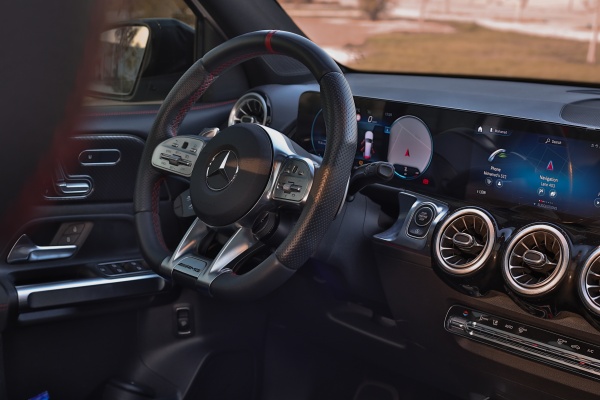
Mercedes-Benz is halting the launch in the United States of its Level 3 automated driving system, Drive Pilot, which was the first and only system approved in the country.
InsideEVs, an electric vehicle-focused outlet, reported on Jan. 14 local time that Mercedes-Benz has stopped production of Drive Pilot and decided not to apply the system to future new S-Class models. Drive Pilot was first introduced in late 2023 on the EQS electric vehicle and the S-Class sedan, drawing attention in the U.S. market, but it has been assessed as limited in real-world usability due to speed limits and operating conditions.
Germany's Handelsblatt reported that Drive Pilot worked only on certain highway sections in Nevada and California, and its top speed was limited to 40 miles per hour, about 64 km per hour. It could be used only if strict conditions were met, including clear weather during daytime and clearly marked lanes. Buyers also needed to select additional hardware when purchasing the vehicle, and an annual subscription fee of $2,500 was also a burden.
Mercedes-Benz appears to have concluded that these constraints meant Drive Pilot did not provide customers with as much value as expected. Mercedes-Benz spokesman Tobias Mueller told The Verge in an interview that the current system was not sufficient in terms of cost-effectiveness and that the company plans to present more advanced technology within 2 to 3 years.
Mercedes-Benz plans to introduce MB.Drive Assist Pro, a next-generation driver assistance system, as an alternative to Drive Pilot. The system provides Level 2++ driving assistance functions and requires the driver to keep a hand on the steering wheel, but it can operate on urban roads as well as highways. It is similar to Tesla's Autopilot.
Mercedes-Benz has also decided not to use the LiDAR sensors that were applied to Drive Pilot in future systems. The expiration of a contract in 2024 with its existing LiDAR supplier, Luminar, is also reported to have influenced that decision.
Over the long term, Mercedes-Benz is aiming for a next-generation automated driving system capable of fully hands-free and eyes-off driving on highways. Still, considering the regulatory environment and technological maturity, a view is emerging that commercialization will require a considerable amount of time.
 Jinju Hong
hongjj@d-today.co.kr
Jinju Hong
hongjj@d-today.co.kr