
From space travel to a banana taped to a wall, dinosaur fossils and a $69 million non-fungible token (NFT). Big players who amassed huge wealth through cryptocurrencies are drawing attention by pouring large sums into unexpected purchases. Their spending patterns, which value rarity, symbolism and leaving a record over practicality, are drawing notice.
On Nov. 26, blockchain outlet Cointelegraph reported that early bitcoin investors and figures in the cryptocurrency industry have shown off their wealth differently from typical wealthy people. Unusual spending has continued, including buying space travel tickets and collecting multimillion-dollar artworks and rare fossils.
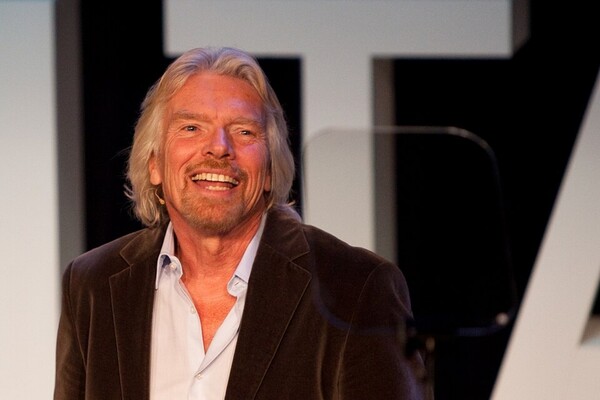
A leading example is space travel. Richard Branson (리처드 브랜슨), founder of Virgin Group, announced in November 2013 that Virgin Galactic, which was pushing its space travel business, would accept bitcoin as payment for flight tickets. The seat price at the time was $250,000 (about 300 million won). Cameron Winklevoss (캐머런 윙클보스) and Tyler Winklevoss (타일러 윙클보스), co-founders of Gemini, reserved seats in March 2014 after paying 312.5 BTC each. The flight schedule was delayed several times, and Virgin Galactic's spacecraft VSS Unity was retired in June 2024.
Some figures in the crypto industry have actually been to space. Justin Sun (저스틴 선), founder of Tron, paid $28 million (about 37.5 billion won) in 2025 to join a Blue Origin spaceflight. Chun Wang (춘 왕), co-founder of crypto mining firm f2pool, commanded SpaceX's Fram2 mission. The mission was recorded as the first in the history of human spaceflight to pass over both the Earth's North Pole and South Pole. The cost for the four crew members was estimated at about $220 million (about 300 billion won).
Justin Sun also made headlines for buying art. In November 2024, he won an auction for Italian artist Maurizio Cattelan's work "Comedian" for $6.24 million (about 8.4 billion won). The work consists of a single banana taped to a wall. After the purchase, Sun took a bite of an actual banana at a news conference in Hong Kong. What he owns, however, is not the banana itself but a certificate of authenticity specifying the installation method of taping a banana to a wall.
Another figure showed interest in life-extension technology. Hal Finney (할 피니), an early bitcoin contributor who exchanged the first bitcoin transaction with Satoshi Nakamoto, was cryonically preserved after his death in 2014. He was a member of the Alcor Life Extension Foundation for more than 20 years and chose cryonic preservation in the expectation that he could possibly be revived if medical technology advances in the future. The related costs were funded through life insurance and bitcoin donated by fans. Bitcoin investors Peter Thiel (피터 틸) and Roger Ver (로저 버) were cited as people expected to choose cryonic preservation. In a 2021 interview, Ver said he seriously considered even taking his own life and being cryonically preserved to avoid being imprisoned at age 23.
There have also been cases of large investments in rare collectibles. A group of investors that included Yoann Turpin (요안 튀르팽), co-founder of crypto market maker Wintermute, bought a triceratops fossil in 2025 for $5 million (about 6.7 billion won). It is a rare fossil, with only about 24 known specimens worldwide, and it was later moved from Wyoming in the United States to a storage facility in Singapore. Turpin explained that limited supply is what makes fossils attractive, comparing them to bitcoin with a fixed issuance.
Historic artifacts and jewelry have also made the spending list of crypto tycoons. Patrick Gruhn (패트릭 그룬), former head of FTX Europe, won an auction in 2024 for a gold pocket watch recovered from the body of Titanic passenger John Jacob Astor IV for $1.5 million (about 2.0 billion won). The watch, known as a gift for his wife, drew attention as a Titanic-related historic artifact. Richard Heart (리처드 하트), founder of HEX, bought the 555.55-carat black diamond "The Enigma" in February 2022 for about $4.3 million (about 5.7 billion won). He later changed the gem's name to the HEX.com Diamond. The U.S. Securities and Exchange Commission filed a civil lawsuit against Heart in 2023 over alleged misuse of investor assets and also took issue with funds used to buy the diamond.
Another case symbolising crypto tycoons' spending is ultra-expensive NFT trading. Crypto investor Metakovan (메타코반) bought digital artist Beeple's work "Everydays: The First 5000 Days" in March 2021 for 42,329.453 ETH, worth about $69 million at the time (about 92.5 billion won). The piece is a collage of 5,000 digital images, and it set the record at the time for the most expensive NFT transaction. It was also seen as one of the largest transactions for a living artist's work. Metakovan is known to have no intention of selling the work.
Their spending has something in common. They invest large sums not in practical items for everyday use, but in rare objects that are not easily obtained, items with historic meaning, or symbolic experiences that can attract public attention. From space travel and the banana artwork to dinosaur fossils and ultra-expensive NFTs, these unusual purchases by crypto tycoons show how people who have amassed huge wealth express their own presence through rarity and symbolism.
 Jinju Hong
hongjj@d-today.co.kr
Keyword
#Virgin Galactic #Bitcoin #Justin Sun #FTX #NFT
