
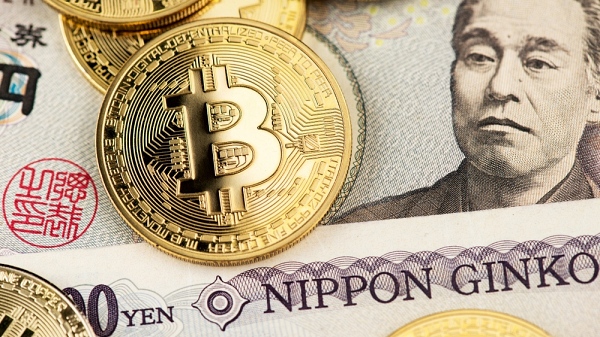
SBI Holdings Chairman and President Yoshitaka Kitao (기타오 요시타카) urged the Japanese government to bring forward the introduction of separate taxation for cryptocurrencies and spot exchange-traded funds, blockchain media outlet CoinPost reported on Monday.
Kitao wrote on Facebook that growth in the digital industry depends on swift institutional reform by the state, and he took issue with the speed of Japan’s response.
He pointed in particular to the timing of implementation. Japan passed a revised law in July 2026 to include cryptocurrencies under the Financial Instruments and Exchange Act, and it also decided to introduce a 20 percent separate self-assessed tax. He said even the earliest application is likely to be 2028, and he saw that pace as risking the loss of global capital and business opportunities. He also noted that spot bitcoin ETFs still cannot be bought in Japan.
He cited as the scenario to avoid the world’s risk money simply passing Japan by. Risk money is the source that creates the next industry, he wrote, adding that when money leaves, talent and information move with it. In the cryptocurrency market, he said money and people move to regions with clear rules, and markets outside the regulatory system can be difficult even to consider as an option.
He raised the issue alongside regulatory changes overseas. In Europe, the comprehensive regulatory framework MiCA was fully applied, and in July 2026 transitional measures for existing operators also ended. In the United States, the market structure bill known as the Clarity Act was voted down in a Senate vote in September, but just 2 days later the U.S. Securities and Exchange Commission opened a temporary path for trading tokenised U.S. stocks. In October, the U.S. Commodity Futures Trading Commission also moved to prepare a framework for cryptocurrency trading within its existing authority.
On Asia, he said both countries and companies have already started running. Hong Kong issued the first Hong Kong dollar-based stablecoin to receive authorisation in August. In Vietnam, 7 companies, including affiliates of major banks, are competing for up to 5 exchange licences. Thailand introduced a measure that exempts individual investors for 5 years from tax on cryptocurrency profits from sales made through licensed operators.
Kitao also took issue with corporate responses. He wrote that a bigger problem for companies than regulatory delays is an attitude of waiting for institutionalisation. Digital finance is not an industry where competition starts after rules are completed, he said, adding that the time until a system is formed is itself the period of competition. He argued that Japanese companies should build businesses first in Asia’s growing markets rather than waiting for domestic rules to be put in place.
He cited tokenised stocks as a representative example. U.S. companies have provided tokens based on U.S. stocks to investors outside the United States through offshore issuers. He said licence competition would intensify once full permission is granted at home, but he judged that operators that have already built a track record offshore could have an advantage.
On the government’s role, he said Japan has a proof-of-concept testing system, but it has not been designed as a structure in which real customers and money move. He called for an early opening of a commercial market with limits on products and trading volume, early implementation of separate taxation and ETFs, and swift acceptance of operators that have secured track records overseas.
At the end of his post, he asked, "Will Japan be chosen by the world, or will it simply be passed by?" He added, "The answer depends on what resolve Japan shows within the next 2 to 3 years." It is read as a warning that the longer Japan’s regulatory overhaul is delayed, the more cryptocurrency funds and business opportunities could move to other markets in Asia.
 Jinju Hong
hongjj@d-today.co.kr
Keyword
#SBI Holdings #Yoshitaka Kitao #Japan #Bitcoin #SEC
