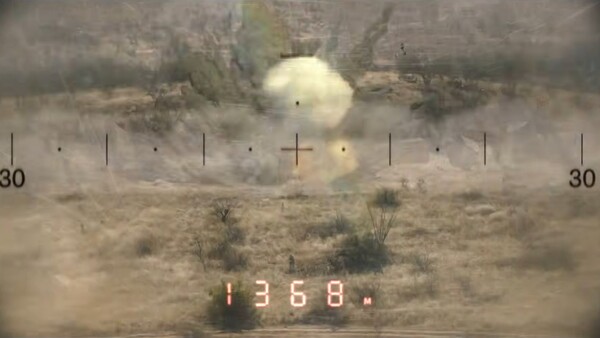
The U.S. Air Force is set to overhaul its future air combat strategy around AI, advanced sensors and autonomous weapon systems. The plan is to move away from traditional air defense focused on intercepting enemy aircraft and drones and instead strengthen integrated combat capability by detecting threats early and linking multiple weapon systems.
On Nov. 19 (local time), IT outlet TechRadar reported that the U.S. Air Force recently announced a new force modernization strategy, Force Design 2026. The Air Force formally unveiled the strategy on Nov. 10 and presented advanced sensors, AI, networks and unmanned systems as core technologies for future battlefields.
The new strategy puts more emphasis on connecting and cooperating among forces than on the performance of individual fighter jets or air defense weapons. Under the approach, when sensors detect an enemy threat, AI and command-and-control systems share relevant information and coordinate a response. It can support rapid situational assessment and efficient force operation even in complex battlefields where multiple unmanned aircraft are deployed simultaneously.
Integrating existing manned aircraft with autonomous weapon systems has emerged as a key task. The goal is to enable fighters, drones, sensors and weapons to continue operations in coordination even when communications networks or navigation systems are disrupted.
Christopher Niemi (크리스 니에미), deputy chief of staff for force modernization and chief modernization officer, said, "New technologies provide capabilities that were difficult to imagine just a few years ago, while also posing a threat to existing ways of operating airpower."
The strategy builds on and advances One Force Design, which was prepared under then Air Force Chief of Staff David Allvin (데이비드 올빈) in October 2024. It focuses on integration among forces and the ability to sustain operations using advanced technologies, rather than simply improving weapon performance.
Air Force Chief of Staff Kenneth Wilsbach (케네스 윌즈바흐) stressed that the strategy marks a turning point that fundamentally changes the Air Force's approach to responding to future wars.
The strategy document itself is classified, so specific weapons deployments, budgets and detailed force composition were not disclosed. The U.S. Air Force plans to use it as a standard for future analyses of operational vulnerabilities and for deciding weapons development and priorities for force investment.
 Jae-won Choi
ittt_0801@d-today.co.kr
Keyword
#U.S. Air Force #Force Design 2026 #One Force Design #Christopher Niemi #Kenneth Wilsbach