
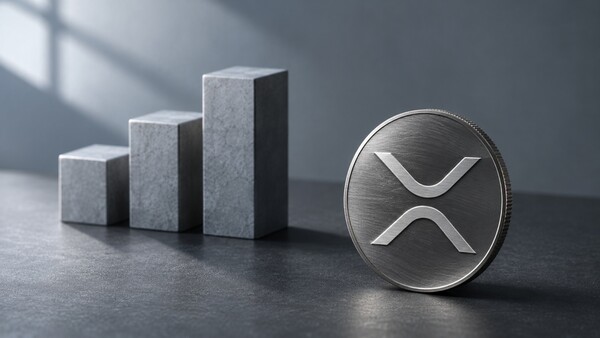
Ben Simpson, founder of crypto investment firm Collective Shift, named XRP as one of the altcoins he would not invest in in 2026.
The Crypto Basic, a blockchain outlet, reported on Nov. 23 that Simpson flagged as a problem a structure in which Ripple's business growth does not directly accrue to XRP holders.
He said Ripple is expanding into payments, custody, stablecoins and institutional financial services, but that the gains from such growth do not automatically go to XRP holders. He said it is true that XRP supports fast and cheap transactions, but that it is less compelling as an investment asset.
The key is the "value capture" structure. Simpson said ordinary corporate shareholders can expect dividends or distributions through equity stakes, but XRP holders have no contractual rights to Ripple profits.
He said there is also no systematic mechanism to buy XRP tied to Ripple profits or return value to holders. Ripple has bought XRP on the secondary market in the past to support payment liquidity, he said, but that differs from a buyback program that returns corporate profits to a token.
He also took issue with a mismatch between network fee levels and market value. Simpson said 30-day fees on the XRP Ledger (XRPL) were about $36,000 and cumulative fees for 2026 were about $200,000, comparing that with XRP's market capitalisation at the time of more than $80 billion.
DefiLlama data showed recent 30-day transaction fees on the XRP Ledger at about $49,634 and XRP market capitalisation at about $59 billion. The fact that XRP Ledger fees are not distributed to holders and are permanently burned also weakens the linkage to returns, he said.
Former Ripple chief technology officer David Schwartz (데이비드 슈워츠) has also said demand for transaction fees alone would make it difficult to lift XRP's price. He has said XRP's role in liquidity, its unique position within the XRP Ledger and broader network adoption are more important variables.
Simpson also drew a line against expectations that catalysts such as Ripple's banking partnerships or the launch of exchange-traded funds (ETFs) would lead to long-term price gains. He said that despite such positives, XRP had underperformed against bitcoin for a long period.
He mentioned Hyperliquid and Pump.fun as comparisons. Hyperliquid had about $80 million in fees over the past 30 days and uses part of trading revenue to buy HYPE through a support fund. Pump.fun was also presented as a case in which application revenue supports an investment thesis. Simpson said investment criteria should include the presence of paying users, revenue growth, a structure that passes value to token holders, the risk of dilution from additional issuance, and how much current valuation is already pricing in future growth.
Such points have also been raised among other cryptocurrency figures. Cardano founder Charles Hoskinson has also said Ripple needs to adopt a structure for buying XRP linked to profits.
He said he does not deny the possibility of short-term price gains, but stressed the need to distinguish between price moves driven by speculative demand and positive sentiment and a structure in which a token absorbs economic value over years. He said that even if Ripple succeeds as a business, XRP investors will have no choice but to keep relying on market demand instead of receiving a direct distribution of the company's performance.
6 altcoins I wouldn't touch with a 10-foot pole in 2026: 1) Ripple (XRP) https://t.co/HaTcHagP8R
 Yoonseo Lee
yslee@d-today.co.kr
Keyword
#XRP #Ripple #XRPL #DefiLlama #Bitcoin
