
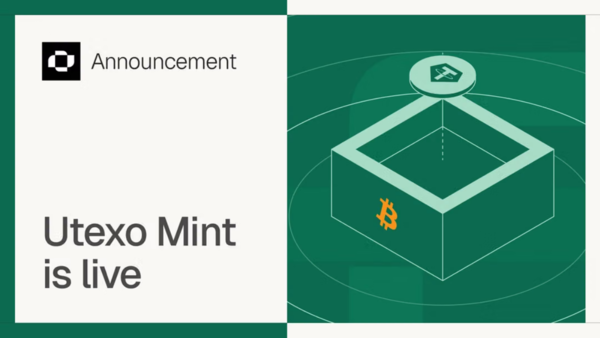
[Digital Today reporter Yoonseo Lee] Blockchain startup Utexo is putting Tether's dollar-linked stablecoin USDT back on the Bitcoin network.
Cointelegraph reported on Oct. 29 that Utexo plans to unveil a bitcoin-based USDT using the RGB protocol on Nov. 28.
Utexo said it will support private transfers through RGB, which does not leave asset transaction data directly on-chain. It also presented a plan to add the Lightning Network in the first quarter of 2027 to provide faster payments. Viktor Ihnatiuk (빅토르 이나티우크), Utexo's co-founder and chief executive officer, said combining Bitcoin as a payment settlement layer with RGB as a means of protecting transaction information enables secure and fast transfers.
USDT was first launched on the Bitcoin network in 2014 through the Omni protocol, but issuance was halted in August 2023 due to declining usage. In August 2025, a plan to launch RGB-based USDT was announced, but it did not lead to an actual launch. Tether later led Utexo's $7.5 million seed investment round in March this year. Utexo plans to introduce bitcoin network-based USDT using Tether's USDT0 protocol.
The technical foundation is RGB, which implements asset contracts on Bitcoin. Instead of recording all transaction information on a public blockchain, it is designed so transaction parties verify asset movements. Combined with the Lightning Network, it also removes the need to record a transaction on Bitcoin's base layer each time an asset is moved. Ihnatiuk argued this structure could be faster than Solana, Monad (MON), Sui (SUI) and Aptos (APT).
Risks stemming from the inter-network connection structure remain. To move existing USDT to the Bitcoin network through the Utexo mint, USDT0 must be locked on Arbitrum and the same amount of bitcoin-based USDT must be issued. For redemption, the RGB asset is burned and the funds locked on the original network are released. Security therefore depends not only on Bitcoin and RGB but also on the connection structure linking the two networks.
Preparations to enter the market are also underway. Utexo said it opened its USDT mint service early on Oct. 22 to verified professional operators. Exchanges, wallets and market makers can test issuance, private transfers and redemption on the Bitcoin Signet testnet.
Utexo has highlighted demand for trading and lending in the Bitcoin ecosystem while drawing a line at directly adopting an Ethereum-style decentralised finance model. Ihnatiuk said, "Thinking you can replicate Ethereum DeFi on Bitcoin is a big mistake," and added, "Bitcoin was originally made for payments." He said if mining firms exchange BTC for USDT within the Bitcoin network without moving assets to centralised exchanges, it could help reduce custody risk and automate hedging.
Utexo set a goal of increasing the scale of USDT on the Bitcoin network to at least $1 billion within the next 12 months. The initial target was $10 billion, and it presented $5 billion as an intermediate goal. Whether bitcoin-based USDT can compete with Ethereum and Tron depends on whether it can secure corporate payment demand by emphasising privacy and speed and build trust in the bridge structure.
 Yoonseo Lee
yslee@d-today.co.kr