
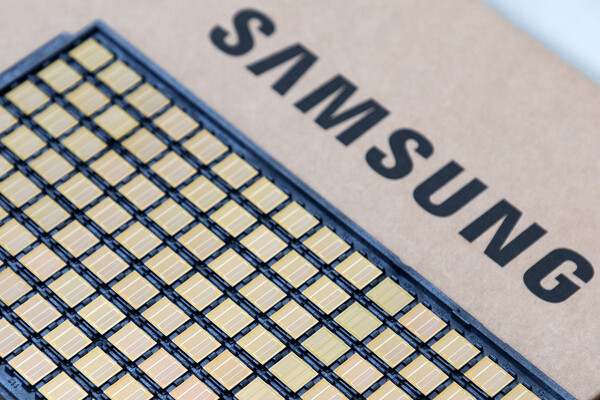
Samsung Electronics’ profitability rose another notch. Higher memory prices and expanding sales of HBM4, a high-bandwidth memory product, lifted semiconductor profits and pushed quarterly operating profit above 100 trillion won for the first time among global tech companies. Set businesses such as smartphones, however, faced higher component costs due to rising memory prices.
Samsung Electronics said on Oct. 29 its third-quarter consolidated operating profit rose 783 percent from a year earlier to 107.44 trillion won. Third-quarter revenue rose 127 percent to 195.25 trillion won. With operating profit rising more than revenue, the operating margin was 55.0 percent. A year earlier it was 14.1 percent and the previous quarter it was 52.2 percent. From the previous quarter, revenue rose 13.9 percent and operating profit rose 20.1 percent.
Park Soon-cheol (박순철), Samsung Electronics CFO, said on a conference call that backed by record memory results the company set new records for both revenue and operating profit for a fourth straight quarter and topped 100 trillion won in quarterly operating profit for the first time among global tech companies. Cumulative operating profit for the first three quarters was 254.17 trillion won, up 980 percent from a year earlier, and the cumulative operating margin rose to 50.8 percent from 9.8 percent a year earlier.
The rise in profit was led by the Device Solutions (DS) division. Memory increased HBM4 sales and responded to rising demand for server DRAM and SSDs, posting its best-ever quarterly results. With demand for AI infrastructure outstripping supply, third-quarter DRAM average selling prices rose about 20 percent from the previous quarter and NAND average selling prices climbed in the high teens. Bit shipments rose only in the single digits, so prices pulled profits higher.
The foundry business increased revenue from the previous quarter and significantly improved results as revenue from 4-nanometre HBM base dies rose and sales of leading-edge processes expanded. Orders for 2-nanometre processes are also rising, centred on high-performance computing (HPC) customers including major hyperscalers. It expected revenue growth of more than double digits in the fourth quarter from both the previous quarter and a year earlier. Kang Seok-chae (강석채), a vice president of the foundry business, said the pace of leading-edge capacity expansion is currently failing to keep up with actual demand growth. System LSI also sustained quarterly revenue growth in the second half with wider adoption of system-on-chip (SoC) in new models and higher sales of 200-megapixel image sensors, and it won new projects in the custom SoC business.
MX and display respond with premium products amid cost pressure and cooling demand
The Mobile eXperience (MX) division increased revenue from a year earlier with the launch of new models such as the Galaxy Z Fold8. But rising memory prices acted as a cost burden for set businesses. Profitability improved slightly from the previous quarter through premium product launches and cost cuts, but it was not enough. Daniel Araujo (다니엘 아라우조), a managing director in the MX division, said expanding AI server memory demand has led to a shortfall in mobile memory supply since the fourth quarter of last year and price gains are continuing.
Samsung Display increased revenue and profit in its small and medium-sized business by supplying new products to key customers on time, while the large-panel business improved profit and loss through sales of high-end products and cost cuts. Falls in major exchange rates including the dollar and euro had a negative effect of about 10 trillion won from the previous quarter, mainly in the components business.
Samsung Electronics said the gap among divisions is likely to persist into the fourth quarter and next year. Park, the CFO, said, "In 2027, strong conditions in the semiconductor market are expected to continue due to record AI investment and supply constraints," adding, "With the strong growth momentum of the DS division, we expect to achieve results that exceed 2026."
The Device eXperience (DX) division expected profitability pressure to continue next year. It judged that market uncertainty and rising costs will persist in the fourth quarter as well. The MX division plans to improve its profit structure next year centred on its top-tier models, while Samsung Display plans to increase the share of premium products such as foldables and expand sales by starting operation of a new 8.6-generation IT OLED line.
 Dae-geon Seok
d2dg@d-today.co.kr