
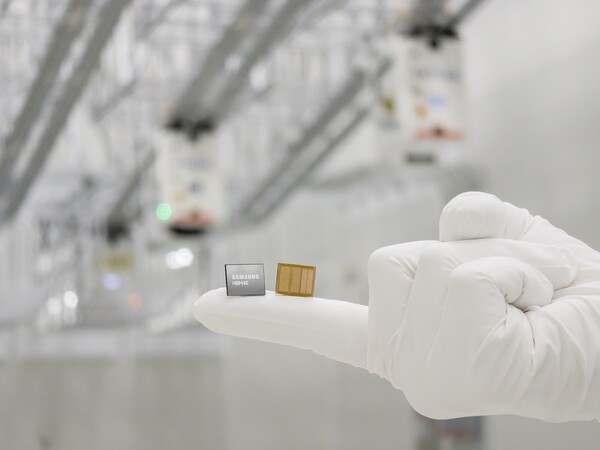
Samsung Electronics said in its memory business that demand continues to outstrip supply. Memory demand for AI servers is steadily growing, but supply capacity remains insufficient due to new fab construction and transitions to new generations of high-bandwidth memory (HBM). Samsung Electronics said it expects the supply shortfall to continue through 2028. It said it is securing volume and prices in advance through HBM4 sales and long-term supply contracts, while adjusting equipment deployment to changes in demand.
Kim Jae-joon (김재준), a vice president in Samsung Electronics' memory business division, said on a third-quarter earnings conference call on Wednesday that demand growth continues to exceed supply despite efforts to expand output. He said demand for AI infrastructure-related products has increased further as agentic AI is being adopted in earnest, including HBM, server DRAM modules (RDIMM) and server SSDs.
Samsung Electronics plans to raise further in the fourth quarter the share of sales from HBM, server DRAM and SSDs. It said demand is increasing mainly for products tied to launches of new graphics processing units (GPU) and central processing units (CPU). In NAND, it said large orders for QLC SSDs are coming in as personal AI agent services spread.
It said one reason supply is failing to keep up with demand is that the time required to increase production capacity is being delayed more than expected. Samsung Electronics said that even if industry capital expenditure (CAPEX) rises sharply in 2027, a significant portion will be used to secure new space and cover higher construction costs. It said the long lead time from fab construction to wafer production makes it difficult for such spending to translate into higher output in 2028.
Lead times for equipment orders are also lengthening. HBM4E and HBM5 have larger die sizes and more metal process layers. Kim said physical constraints limiting supply increases due to the higher conversion ratio between HBM and conventional DRAM production remain unavoidable. That means the more HBM output rises, the less capacity can be allocated to general-purpose DRAM.
Prices also rose throughout the quarter due to the supply shortfall. Market prices increased across all applications, led by server uses. Samsung Electronics' third-quarter average selling price (ASP) for DRAM rose by around 20 percent from the previous quarter, while NAND ASP climbed by the high teens. Over the same period, bit shipments rose by the low to mid-single digits for DRAM and the mid-single digits for NAND, meaning price gains outpaced shipment growth. It forecast fourth-quarter bit shipments will increase by the mid to high teens for DRAM and the mid-teens for NAND.
HBM4 posted the biggest increase in sales expansion in this quarter's memory results. Third-quarter HBM4 revenue rose more than threefold from the previous quarter, and HBM4's share of total HBM revenue increased to around 60 percent. Kim said the result aligns with the HBM4 sales targets discussed at the previous earnings release.
Samsung Electronics said it already achieved in the third quarter its goal of securing an HBM market share in the second half of this year at a level matching its overall DRAM market share. It also said it shipped samples of the next generation, HBM4E, in May as the first in the world and that customer responses in initial evaluations were positive.
Samsung Electronics is locking in next year's volumes in advance through contracts. Kim said negotiations for 2027 HBM supply volumes have been completed at target price levels that reflect the company's product competitiveness, and the volumes are already sold out. He said major customers continue to request additional volumes.
◆ Supply shortfall seen through 2028... expanding long-term contracts
Samsung Electronics plans to begin mass production of HBM4E in the first half of next year and increase output in the second half. The company said it has completed long-term supply agreements (LTA) for DRAM with 10 large customers and is negotiating with another 10 major customers. It added that contracted customers' business areas are also expanding from hyperscalers and server companies to mobile, automotive and network companies.
It said demand for rolling extensions, which lengthen contract periods through annual negotiations, is far exceeding its expectations. Samsung Electronics said it is becoming clearer that it can achieve its goal of raising the share of LTAs to 60 to 70 percent of production capacity by 2030.
Samsung Electronics said it expects the tight supply situation to persist even in 2028, based on a synthesis of views from various market research firms.
Samsung Electronics said the remaining variable is the volume needed to respond to increased demand. It said it expects the tight supply situation to continue through 2028. Kim said additional supply requests have come in even within existing contract ranges, but available capacity is currently insufficient. He said the company is reviewing supply-response scenarios from various angles, including changes in product mix across applications. Samsung Electronics said it plans to proceed flexibly with equipment deployment after securing cleanroom space first, while watching changes in demand.
 Dae-geon Seok
d2dg@d-today.co.kr