
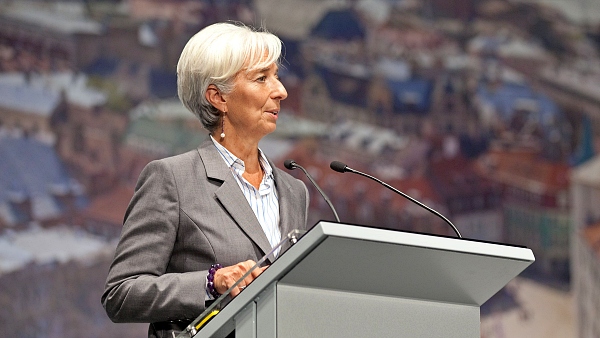
Christine Lagarde, president of the European Central Bank (ECB), announced she will step down early ahead of the end of her term, prompting a wave of criticism from the cryptocurrency industry. Gemini co-founder Tyler Winklevoss took aim at her departure, saying she would be remembered as someone who failed while fighting cryptocurrencies.
Blockchain media outlet U.Today reported on Oct. 29 that Winklevoss wrote on X, formerly known as Twitter, immediately after the resignation announcement, “Your legacy will be failing while fighting crypto,” adding, “I wish you luck on your next move.”
Lagarde said on the day she would leave her post as ECB president as of Feb. 7, 2027. The decision comes about nine months earlier than the originally scheduled end of her eight-year term. Lagarde, who took office in November 2019, expressed gratitude to colleagues she worked with over the past seven years and to those who supported her. The next ECB president will be selected by the European Council.
Winklevoss’s comments are drawing attention as they align with Lagarde’s consistently negative stance on cryptocurrencies during her tenure. In January 2021, Lagarde described bitcoin as a “highly speculative asset” and warned it could be used for illegal financial activity. She later said at a Reuters Next conference that bitcoin had been used for illegal activities such as money laundering, stressing the need for international coordination on cryptocurrency regulation.
In 2022, she further raised the level of criticism. In a Dutch television interview, she described her assessment of cryptocurrencies as “worth nothing.” She cited the absence of an underlying asset that could guarantee investor safety and the risk that individuals with limited investment experience could lose their savings in speculative trading.
Lagarde also highlighted the risks of crypto investing by sharing a family example. She said one of her sons invested in cryptocurrencies despite her warnings, and in November 2023 she said he had lost most of his investment.
Her hardline stance continued in discussions over whether to include such assets in central bank reserves. In January 2025, Lagarde said European central banks would rule out holding bitcoin as a reserve asset. At the time, Czech National Bank Governor Ales Michl proposed reviewing the possibility of investing in bitcoin, but Lagarde opposed it, saying reserve assets must have liquidity, safety and certainty.
The resignation is also drawing attention to the direction of crypto policy among Europe’s monetary authorities. Some expectations have emerged that Europe’s regulatory stance on digital assets could change with a change in ECB leadership, but the successor’s position on cryptocurrencies has not yet been confirmed.
The key issue will be the views of the next ECB president, to be chosen by the European Council, on monetary policy and digital assets. Whether Lagarde’s departure becomes a new turning point in relations between European financial authorities and the crypto industry is expected to depend on the successor’s policy direction.
 Jinju Hong
hongjj@d-today.co.kr