
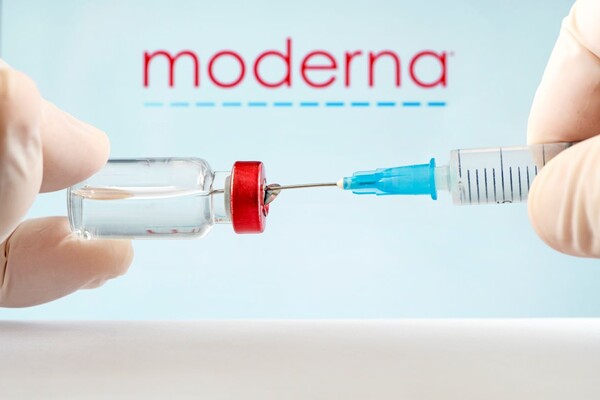
A personalised mRNA cancer vaccine being co-developed by biopharmaceutical companies Moderna and Merck was shown to cut the risk of recurrence or death by 42% in melanoma patients.
On Oct. 22 (local time), IT outlet Ars Technica reported that the two companies confirmed positive results in a phase 3 trial and are discussing approval procedures with regulators.
The trial enrolled 1,137 patients with stage 2B to stage 4 melanoma who had tumours removed by surgery. Researchers split patients in a 2-to-1 ratio to receive either the personalised mRNA vaccine intismeran and Merck's immunotherapy drug Keytruda, or Keytruda and a placebo.
At the 2-year mark, the risk of recurrence or death was 42% lower in the intismeran-Keytruda group than in the Keytruda-placebo group. The recurrence-free survival rate was 82.2% for the combination group and 70% for the control group. The risk of distant metastasis or death also fell by 38%, and the distant metastasis-free survival rate was 88.5% and 80.2%, respectively.
Intismeran is also known as mRNA-4157 or V940. It compares genetic information from a patient's cancer cells and normal cells to select up to 34 mutations specific to the cancer cells, and uses synthetic mRNA containing that information in the vaccine. The approach is designed to prompt the immune system to selectively recognise and attack each patient's cancer cells.
The two companies announced the success of the phase 3 trial in August, but had planned not to release detailed results until a conference presentation. They disclosed the results after the data leaked in advance. Detailed findings are due to be presented at the European Society for Medical Oncology congress in Madrid, Spain, and the paper has been confirmed for publication in The New England Journal of Medicine.
Moderna Chief Executive Stephane Bancel (스테판 방셀) said the results were an important turning point in the vision to develop cancer treatments tailored to each patient's tumour. Dean Li (딘 리), president of Merck Research Laboratories, said the trial was the first phase 3 study to show a meaningful improvement over the standard treatment Keytruda for melanoma patients whose tumours were removed by surgery.
Even so, the effect was smaller than the previously announced 5-year follow-up results from a phase 2 trial. At that time, the combination therapy reduced the risk of recurrence or death by 49% and the risk of distant metastasis or death by 59%. Data on overall survival were also not yet sufficiently mature in the phase 3 trial.
Still, the results suggest personalised mRNA treatment could establish itself as a new approach to cancer therapy. Whether regulators review and approve it is expected to be key to its adoption in clinical practice.
 Seung-a Yoo
ysah@d-today.co.kr