
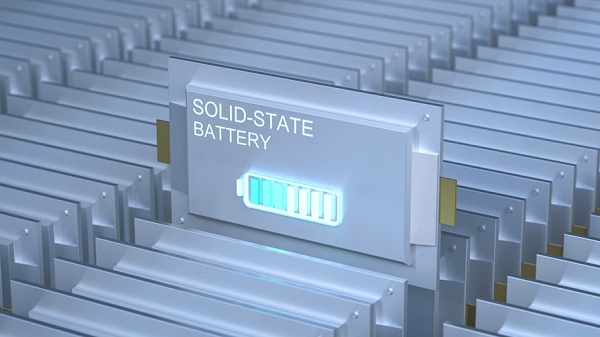
Solid-state batteries, seen as a next-generation technology for the electric vehicle and energy storage system (ESS) markets, are heating up the commercialisation race again. They are drawing expectations on the back of high energy density, fast charging and improved safety, but must clear the hurdles of mass production and cost reductions for broader market adoption.
According to MIT Technology Review on Oct. 21, solid-state batteries use solid ceramic or polymer materials instead of the liquid electrolytes used in conventional lithium-ion batteries. They are drawing attention as a next-generation battery technology because they can lower fire risk, boost energy density and cut charging time.
A key technical challenge blocking commercialisation is dendrites. Batteries that use lithium-metal anodes can grow branch-like lithium protrusions during charging. If they pierce and penetrate the solid electrolyte, the battery risks an internal short circuit. Solid electrolytes were expected to act as a physical barrier, but in practice dendrites have been found to grow along cracks.
Mass production is another hurdle. Manufacturing solid-state batteries requires producing large volumes of low-defect ceramic sheets. Some electrolyte materials react easily with water, requiring dry environments that can strictly control humidity during production. The industry generally sees the mid-2030s as the point when solid-state battery prices reach levels similar to existing lithium-ion battery packs.
Against that backdrop, U.S. solid-state battery company QuantumScape stressed it has secured manufacturing technology needed for commercialisation. Backed by an investment from Bill Gates, the company has focused on solving the dendrite problem by developing a ceramic-based solid electrolyte compatible with lithium metal.
Tim Holme (팀 홈), QuantumScape co-founder and chief technology officer, said, "We have learned over 10 years how to process this material so that it can meet all the other requirements."
QuantumScape in 2025 unveiled a proprietary manufacturing process that rapidly produces and heat-treats the ceramic electrolyte used in solid-state batteries. Holme said, "In ceramics, no one has ever done it this way before." The company says its process cuts a timeline that typically takes days to a matter of minutes. It remains a key question whether such production speed can be maintained in full-scale mass manufacturing.
Automakers and battery companies are also joining the development race. Toyota has been researching solid-state batteries since 2010 and is working with Japanese materials company Idemitsu Kosan to build a pilot production facility. Toyota projected that a vehicle using solid-state batteries could drive up to 745 miles on a charge completed in under 10 minutes.
China's battery company CATL is also accelerating related research and development. CATL is known to have invested about $2.6 billion in a solid-state battery research programme in 2024. Mercedes-Benz last autumn conducted test drives after fitting a solid-state battery to an EQS sedan. The vehicle was reported to have retained enough remaining battery capacity for further driving even after covering 750 miles. Differences in technology and test conditions across companies make it difficult to directly compare performance using range figures alone.
Some are also forecasting that the initial market for solid-state batteries may not be electric vehicles. Automotive batteries are a large market, but high manufacturing costs can lead to higher vehicle prices. Grid-scale energy storage systems are also expected to expand as data centre power demand rises, but adopting new technology that is more expensive than existing batteries requires clear advantages in cost and lifespan. If performance can be secured to supply power for extended periods, solid-state batteries could have broader potential uses.
Some companies are therefore considering aviation and defence as early markets, where the cost burden is relatively smaller and required volumes are limited. Examples include California-based Solid Power and Arizona-based Sion Power exploring entry into those markets.
Evelina Stoikou (에벨리나 스토이코우), head analyst for battery technology and supply chains at BloombergNEF, said, "These sectors are less sensitive to cost and generally require smaller volumes." She added, "It is a good way to prove the concept, raise funding for a pilot plant and ultimately scale up."
Solid-state batteries are moving beyond technical validation of materials and cell design to a stage of securing real production processes and early buyers. But proving performance in a laboratory and mass-producing batteries with consistent quality are separate issues. The outcome of the commercialisation race is expected to ultimately hinge on whether companies can raise manufacturing yields and lower production costs enough to compete with existing lithium-ion batteries.
 Jinju Hong
hongjj@d-today.co.kr