
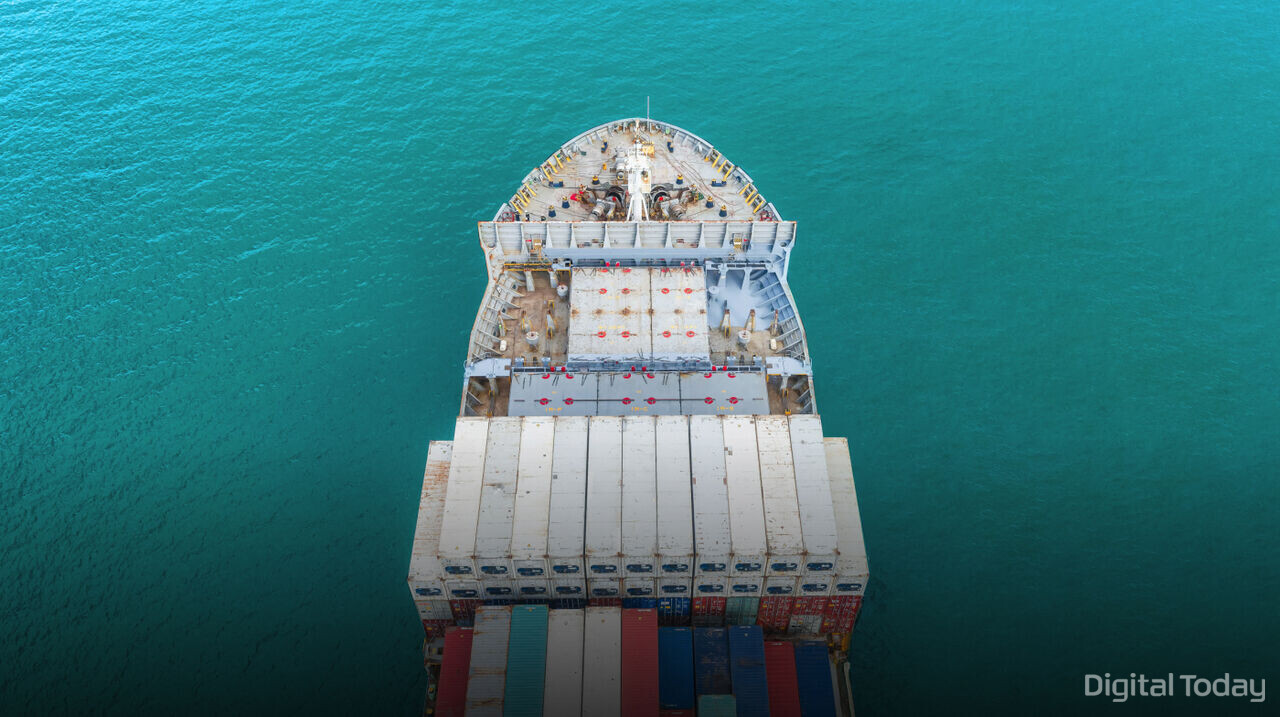
Hanwha Power won approval from a U.S. classification society for an all-electric container ship design based on a large-capacity battery energy storage system (ESS). Hanwha Power said on Thursday it received approval in principle (AiP) from ABS for the concept design of a 1,700-TEU battery-powered container ship.
The newly approved design is an all-electric container ship applying a large-capacity battery ESS with about 151 MWh of capacity. It is designed to secure propulsion power using container-type batteries and to operate without direct carbon emissions while sailing by linking with port charging infrastructure.
The batteries are built in container form so they can be loaded onto the ship. This structure increases the efficiency of energy space use, and the ship is designed to have no direct carbon emissions during operation by linking with port charging infrastructure, the company said. It is also aimed at improving vessel performance.
Hanwha Power said the approval strengthened its capability to design electric-propulsion ships based on large-capacity battery ESS. It also broadened its portfolio of eco-friendly ship propulsion solutions. The company plans to use this as a stepping stone to lay the groundwork for entering the next-generation carbon-free maritime transport market.
Hanwha Power is also reported to have secured the basic design for a 1,000-TEU battery-powered container ship. It aims to build a lineup of electric-propulsion ships tailored to operating conditions and customer needs by securing design capability by vessel type. At the commercialization stage, it can also review the possibility of applying battery leasing and a battery-as-a-service (BaaS) model. This is a measure to ease shipowners' initial investment burden.
Hwang Jong-gyu (황종규), executive director in charge of technology solutions at Hanwha Power, said, "Securing this ABS AiP is an important opportunity to expand Hanwha Power's eco-friendly ship technology capability into the field of all-electric propulsion vessels based on large-capacity batteries." He added, "Based on an integrated solution that combines electric propulsion and container-type battery technology, we will respond to the next-generation carbon-free maritime transport market."
 Daegeon Seok
d2dg@d-today.co.kr