
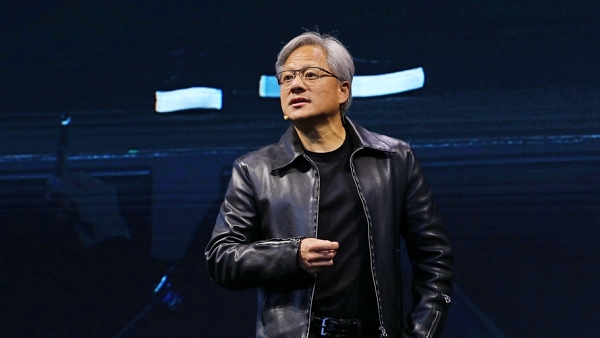
Nvidia CEO Jensen Huang (젠슨 황) said demand for neoclouds, AI-focused cloud providers, is surging but there is not enough capital to keep up with the pace of growth.
On Oct. 22, CNBC reported that Huang said at Nvidia's GTC event in Berlin: "Underlying demand for neoclouds is explosive, but there is a lack of working capital to support it."
Huang stressed that the business conditions for neoclouds already include sufficient demand. "If you look at the fundamentals of neoclouds, demand is explosive," he said, calling their capabilities "tremendous." He said financing is a bottleneck during the actual expansion phase. "Working capital to drive growth is missing in the middle," he said. "There is a shortage of capital as AI demand is occurring at the same time across industries with too much AI demand."
He presented the lack of capital not as a simple issue of investor sentiment but as a direct constraint on expanding supply. "Demand for capital is much greater than the availability of capital," he said, adding the issue will eventually be resolved but is slowing the pace of market expansion for now.
In Europe, he cited electricity as an even bigger constraint. Huang said one of the major bottlenecks in the AI boom is "power" and that energy allocation is a key variable in Europe, where electricity prices are high. He said it is important to prioritise allocating limited power to infrastructure businesses for companies such as Nebius and Mistral to grow.
Huang also pointed to having its own infrastructure as the starting point for expanding the European AI ecosystem. "You can attract investment to Europe, but the starting point is to have your own infrastructure," he said. "If Europe's neoclouds can build infrastructure locally, they can build an AI ecosystem and AI economy on top of that," he said. He added that Europe needs "much more" neocloud capacity across the region.
The remarks come as Nvidia accelerates its push into the European AI market. Nvidia has stepped up efforts this month to expand investment in Europe. The company decided to invest close to $10 billion in total for companies, universities and research institutions.
In London last week, it announced equity investments of more than $1 billion in 5 local startups. It is also investing in French startups. The moves are seen as a strategy to go beyond chip supply and get involved through the stages of building infrastructure and forming an ecosystem as demand for AI computing rises in Europe.
On Nvidia's moves in Europe, Huang said: "We are trying to kick-start an AI economy in Europe." He also said: "Europe has vast technological capabilities, industrial know-how and outstanding science and technology, and is ready to build an AI economy here."
Ultimately, Nvidia sees the key to Europe's AI market as not a lack of demand but infrastructure, capital and electricity. How quickly neoclouds in Europe secure their own facilities and attract limited capital and energy is expected to determine the speed of expanding the local AI ecosystem.
 Jinju Hong
hongjj@d-today.co.kr