
General Motors (GM) unveiled a next-generation electric vehicle strategy built around lithium manganese-rich (LMR) batteries co-developed with LG Energy Solution. It aims to increase battery energy density while applying artificial intelligence (AI) to vehicle structures and manufacturing processes to cut costs. GM also targets shortening new vehicle development to 2 years from 5 years.
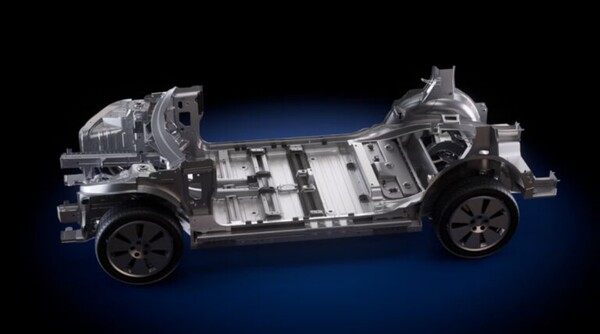
On Oct. 22 (local time), EV outlet CleanTechnica reported that GM presented its next-generation technology strategy, including LMR batteries and a fourth-generation EV platform, at an event in New York on Oct. 21. The core is redesigning the entire EV development process, from battery chemistry to vehicle electronics and software architecture and manufacturing.
LMR is short for lithium manganese-rich, and GM said its energy density is 33 percent higher than lithium iron phosphate (LFP) batteries. The goal is to deliver longer driving range with smaller and lighter battery packs at the same level of cost. The event did not disclose specific metrics such as performance in low temperatures and charging speed.
GM President Mark Reuss said the company plans to apply LMR batteries to high-volume vehicle classes. He outlined a plan to improve cost, range and performance in mass-market EVs through battery technology innovation. He also stressed GM will not back away from the EV market.
AI-based computer modelling was used in battery development. GM engineers tested more than 300,000 battery designs in a virtual environment before building physical prototypes. The company said it took 1 month from the time it conceived the first LMR battery pack concept to formal programme approval.
Next-generation EVs will be built on the fourth-generation platform. GM plans to cut manufacturing costs and expand interior space by using smaller and lighter electric motors. It said it also reduced the number of parts in each drive unit by 40 percent compared with previous models.
The vehicle electronics and software architecture will also change. GM plans to adopt a central computing architecture that reduces the number of control modules and cuts wiring length by 30 percent versus existing models. It will integrate perception and propulsion, active safety and chassis control functions into a single high-speed central computing unit. GM said this will increase processing speed on the fourth-generation platform by 40 percent.
GM will introduce an AI-based process system called PlantBrain at production sites. Production teams can test process steps in a virtual environment before installing equipment on the actual assembly line, and review equipment layout and worker movement paths. The approach identifies safety and work convenience issues in advance and improves vehicle and battery pack quality by combining factory data with computer models. GM said the system reduced battery pack completion time by 30 percent.
GM is also changing how it develops new vehicles. It set a goal of cutting vehicle development time to 2 years from the previous level of 5 years by using AI tools. Sterling Anderson (스털링 앤더슨), GM chief product officer, said the company is shifting from sequential development procedures to an operating system based on large-scale data and concurrent development. The plan is to reduce development time while increasing product competitiveness by closely linking design, engineering and manufacturing.
Autonomous driving and driver assistance functions will also be integrated into the central computing system. GM plans to use its newly developed central computing unit for autonomous functions not only in EVs but in all vehicles it produces. Sebastian Bauer (세바스찬 바우어), GM head of human interface design, said trust is important as autonomous functions expand and that the company will adopt greater transparency as a design principle so users can understand what decisions a vehicle makes.
The announcement draws attention for bundling battery technology, vehicle platforms and AI-based development and production systems into a single EV strategy. GM aims to raise energy density relative to cost with LMR batteries, simplify vehicle structures by reducing parts and wiring, and boost development and production efficiency through virtual design and process automation.
GM has not yet provided specific details such as LMR battery charging speed and low-temperature performance, or the launch timing of mass-produced vehicles using the next-generation platform. It also remains to be confirmed how much its goal of cutting development time to 2 years and the effects of improved production efficiency will be realised in mass production.
 Jinju Hong
hongjj@d-today.co.kr