
Cable TV operators experiencing management difficulties are paying broadcasting and telecommunications development fund levies equal to 168 percent of operating profit, data showed. Critics said the standards for assessing the fund are not equitable compared with terrestrial broadcasters and others.
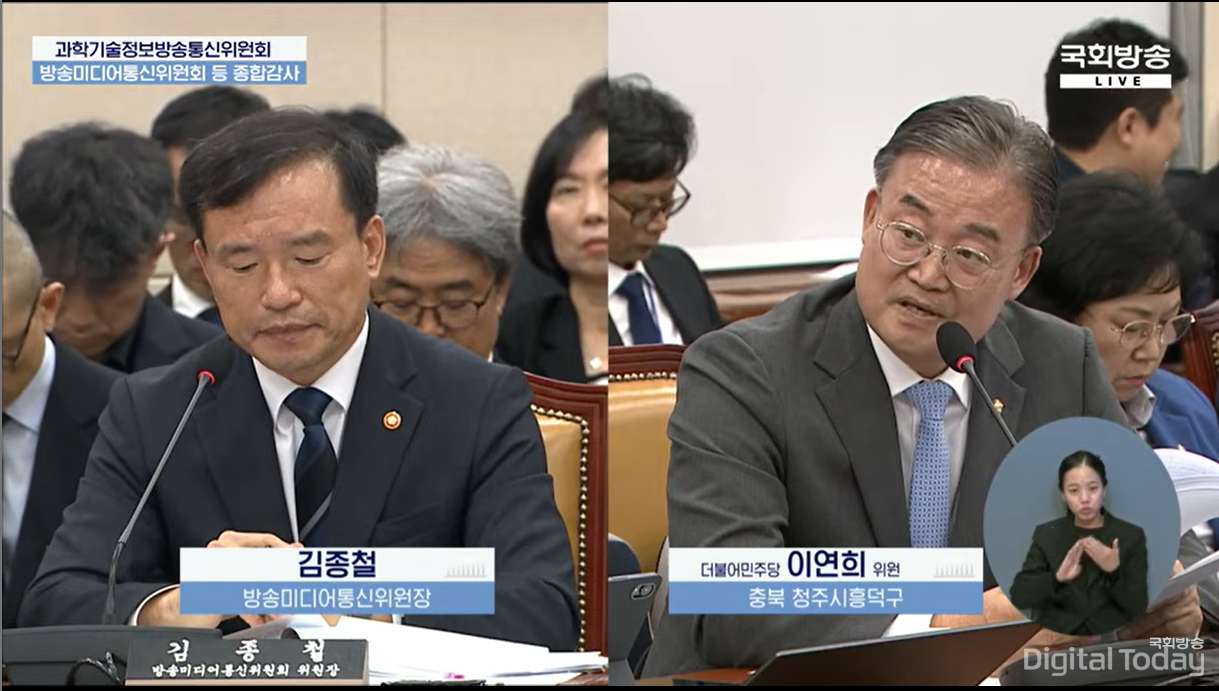
At an overall audit of the National Assembly's Science, ICT, Broadcasting and Communications Committee on Oct. 22, Democratic Party lawmaker Lee Yeon-hee (이연희) raised the issue of the fund burden on cable TV operators with Kim Jong-cheol (김종철), chairman of the Korea Communications Commission.
Lee said the current enforcement decree related to the fund exempts terrestrial, general programming and news channel operators with broadcast advertising revenue of 5 billion won or less from paying the levy when they post a net loss for the period. Cable TV operators are excluded from the exemption.
As a result, JTBC recorded an operating loss of 28.7 billion won in 2024 and did not pay the fund, while KBS posted a loss of 88.1 billion won and paid 180 million won. By contrast, 90 cable TV operators paid 25 billion won in the same year, leaving their fund burden equal to 168 percent of operating profit, Lee said.
Lee questioned whether the 1.5 percent collection rate, maintained for 8 years, and the fairness of the burden among operators should be reviewed as cable TV subscribers decline and profitability worsens.
Kim said, "Over more than 20 years, we have missed opportunities to properly overhaul media laws in light of the rapidly changing media environment." He added, "I think we are not in a golden time and may be passing the last line of defense."
He said enacting an integrated media law to readjust the overall media ecosystem to fit the changed environment is the most urgent task. He stressed the need to comprehensively discuss issues involving various stakeholders, including regional terrestrial broadcasters and cable TV.
Kim said, "Discussions on the legal framework and response measures should be made in a direction that enables coexistence, with each side making concessions where it can and receiving support where it should." He added, "We will keep working on parts that can be resolved urgently."
 Seulgi Son
sageson@d-today.co.kr