
Ripple appears to have adopted a strategy of not revealing to customers that it was using XRP as it expanded payment services for financial institutions in its early days.
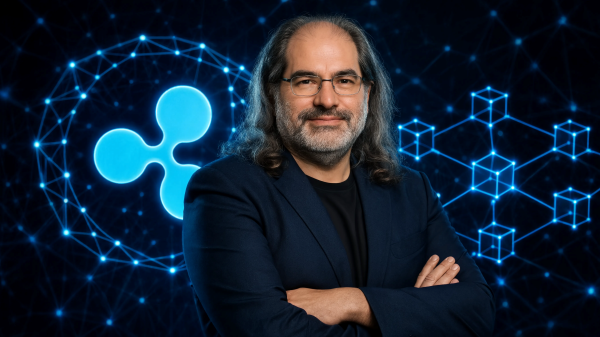
On Oct. 19 local time, blockchain media outlet The Crypto Basic reported that former Ripple chief technology officer David Schwartz (데이비드 슈워츠) explained the background in a conversation with Tony Edward at EverNoss' Nasdaq listing event.
Schwartz said Ripple focused on making technology work in the background so payments would happen naturally, rather than putting blockchain front and center. Customers only had to make payments, and the blockchain infrastructure was designed to be handled behind the scenes, he said. The strategy reflected the fact that banks and financial institutions were reluctant at the time to adopt blockchain.
Schwartz said the mood has now changed. He said everyone now wants a blockchain strategy and shows interest in deploying the technology in practice.
Schwartz said Coinbase's listing also affected shifting perceptions in traditional finance. He said traditional investors had previously raised questions about whether crypto trading volumes or company valuations were real, along with concerns about market manipulation, but the situation changed after Coinbase became a listed company.
EverNoss' Nasdaq listing as an XRP treasury company was also cited as an important step in a trend linking crypto and traditional finance. Schwartz said the listing could help broaden points of contact between the two markets.
On Ripple's technology strategy, Schwartz highlighted the suitability of the XRP Ledger, or XRPL, for financial services. He said the XRP Ledger has fast transaction processing, low fees, stability and decentralisation, and focuses on financial services such as real-world asset tokenisation, lending, stablecoins and payments.
He positioned the XRP Ledger between Bitcoin and Ethereum and Solana. Bitcoin has a relatively limited range of use, while Ethereum and Solana support broader applications, but the XRP Ledger has a structure focused on finance, he said. He said those characteristics could fit institutional demand that prioritises reliability and stability.
As points to watch going forward, he cited broader tokenisation and easing regulatory barriers. Schwartz said this trend could create opportunities for new decentralised finance products aimed at general users. In the long term, he added, the goal is an environment in which users can use blockchain-based financial services without having to be aware of which network their funds are processed through.
 Yoonseo Lee
yslee@d-today.co.kr