
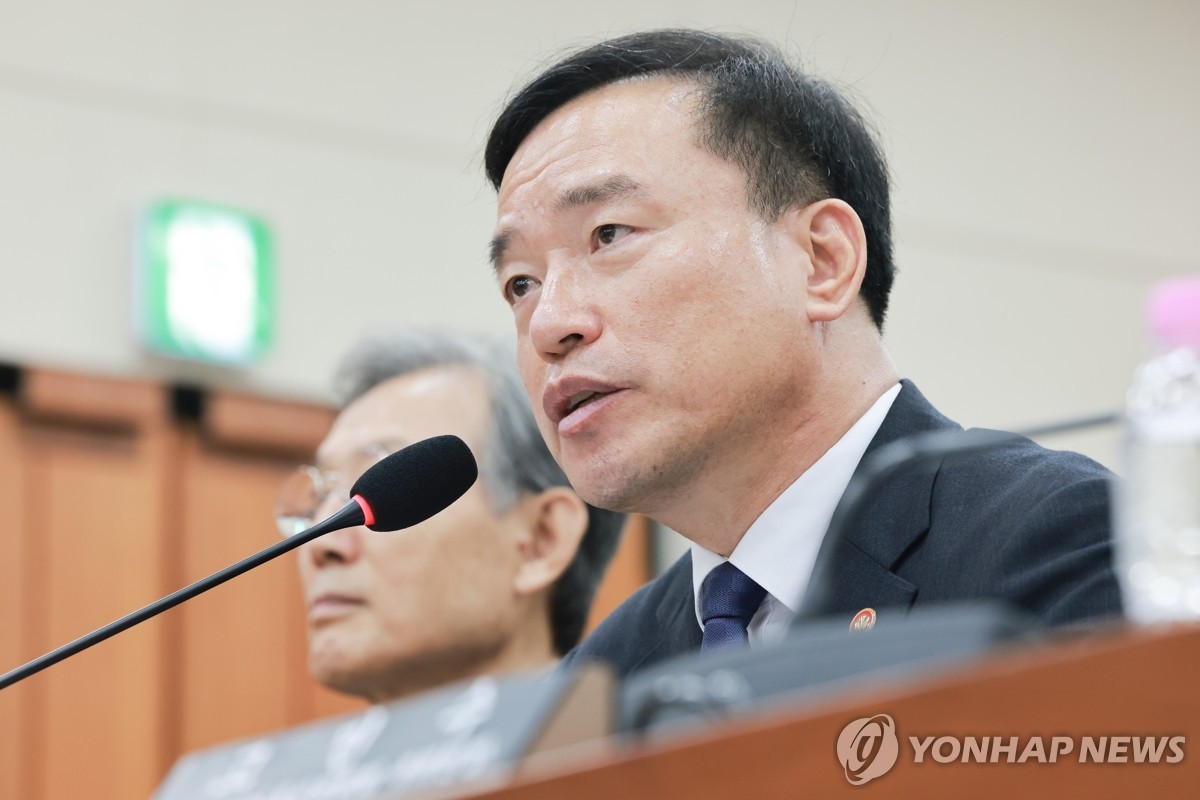
Online platforms are being misused as channels for illegal posts such as drug sales and prostitution brokering, but blocking and deletion and victim-protection systems are not working properly, lawmakers repeatedly said during a parliamentary audit. With gaps in youth protection in AI character chat services also coming to light, the management responsibility of platform operators and the effectiveness of government oversight emerged as key issues.
At the first parliamentary audit since the launch of the Broadcasting Media Communications Commission held on Oct. 12 by the National Assembly Science, ICT, Broadcasting and Communications Committee, lawmakers focused on how global platforms such as Google, Telegram and X respond to illegal content and how AI services protect users. The status of investigations into fines over Google and Apple in-app payments and suspicions that KT misled users was also disclosed.
Weak blocking of illegal posts and limited domestic enforcement authority
Cho Kyung-tae of the People Power Party showed scenes in which searching for "ice" on X displayed posts selling drugs and searching for "conditional meeting" displayed ads brokering prostitution. He said search results appear differently overseas and criticised weak domestic management of illegal posts.
Shin Chang-seop, head of X's South Korean unit, explained that headquarters handles search and content filtering, making it difficult for the local unit to take direct action. He acknowledged that responses to illegal content in South Korea are not sufficiently swift and said he would request improvements from relevant departments.
A lack of cooperation between the government and platforms also came under scrutiny. Cho said consultations between the Broadcasting Media Communications Deliberation Committee and X were limited to three rounds and that the last meeting in August last year did not discuss drug-related posts.
At Google, exposure of information about victims of digital sex crimes and procedures for deleting illegal content were raised as problems.
Lee Ju-hee of the Democratic Party said there were at least 147 cases in which victims' personal information was exposed on external sites during Google's process for requesting removal of illegal filming content, and pressed Google over management responsibility. Citing that there were also requests in 2020 to delete related personal information, she criticised it as a long-running failure to address the issue.
Kim Woo-young of the Democratic Party said deletions of illegal filming content are being delayed due to verification steps in the reporting process and inadequate system linkage among relevant agencies. Yun Goo, head of Google Korea, apologised officially for the exposure of victim information and said he would discuss measures to prevent a recurrence with headquarters.
Telegram's response to child and youth sexual exploitation material and its cooperation with investigations also came under review. Sandeep Yadav, Telegram's chief operating officer and compliance officer, said the company operates an AI-based detection system and a 24-hour response channel dedicated to South Korean authorities, and typically responds to requests within 2 to 10 hours.
Hwang Jung-a of the Democratic Party pointed to youth exposure to provocative YouTube live broadcasts known as "Excel broadcasts" and the exposure of illegal content sites in Google search results, and also called for stronger self-policing by platforms.
Lawmakers also discussed the social impact of platform algorithms and how to respond to disinformation. Choi Hyung-doo of the People Power Party cited research on accounts suspected of manipulating online public opinion and stressed the need to analyse not only content regulation but also behaviour and algorithms that amplify conflict.
Kim Jong-cheol, head of the Broadcasting Media Communications Commission, said society needs to discuss appropriate ways of regulating content and behaviour to respond to public opinion manipulation.
Calls for improvements amid gaps in safeguards and review of AI character chat services
In AI character chat services, lawmakers focused on the effectiveness of youth safeguards and delays in government reviews.
Lee said teenagers and people in their 20s account for a high share of users of Scatter Lab's "Zeta" and warned of the risk of excessive immersion in services that form emotional relationships with AI. She said systems should be 마련 to verify age, limit usage time and respond to risky conversations.
Kim Sun-min of the Rebuilding Korea Party released results from his office's checks showing that conversations related to self-harm and suicide are generated even when a "safe mode" for youth protection is activated. Hwang also raised the issue that scenes of sexual violence and sexual exploitation targeting minor characters are generated without adult verification.
Limits in the government review system also emerged. Kim said 76 of 119 complaints related to AI character chat services are under review, and reports related to "Babychat" have been under review for 494 days. He said a processing deadline should be set from receipt of complaints to review decisions.
Hwang Yong-seok, head of the New Technology Subcommittee at the Korea Internet Self-Governance Organization (KISO), said guidelines for self-regulation of AI character chat services are being prepared. As some standards such as the protected age group and usage time limits would be left to companies' discretion, calls were made for more specific safety standards.
Kim said he agrees there are blind spots in institutional protections for minors and said he will pursue consultations among relevant ministries and legislative support to revise the Information and Communications Network Act or supplement the Framework Act on Artificial Intelligence.
Views were also raised that display obligations should be strengthened at the distribution stage of AI-generated images and videos and that platform operators' management responsibility should be specified.
Decision on in-app payment fines expected this month; KT probe completed
The commission's sanction procedures against platform and telecom operators were also discussed as key pending issues.
Fines over Google and Apple's forced in-app payment practices are expected to be concluded within this month. The matter has gone nearly 3 years without a final disposition since advance notice of the fine proposal was issued in October 2023.
Kim said the case is in a final inspection stage after additional hearings and review of evidence. "We expect a resolution to be passed before October is over," he said.
A fact-finding investigation into suspicions that KT misled users over hacking has also been completed.
Cho pressed KT on whether it infringed users' right to choose by emphasising the safety of its services without sufficiently disclosing the situation despite recognising signs of hacking.
Kim explained that the commission sent KT a proposed corrective action in September and will proceed with committee deliberation and a resolution through follow-up procedures. He said if illegal acts are confirmed, it will consider measures under relevant laws, including corrective orders and fines.
 Son Seul-gi
sageson@d-today.co.kr
Son Seul-gi
sageson@d-today.co.kr