
As South Korea's short-form drama market grows rapidly, concerns have been raised that regulatory blind spots are emerging, including overseas major operators being excluded from the requirement to designate a youth protection officer. The Broadcast Media Communications Commission said it would improve its methods for surveying operators and respond in cooperation with related agencies.
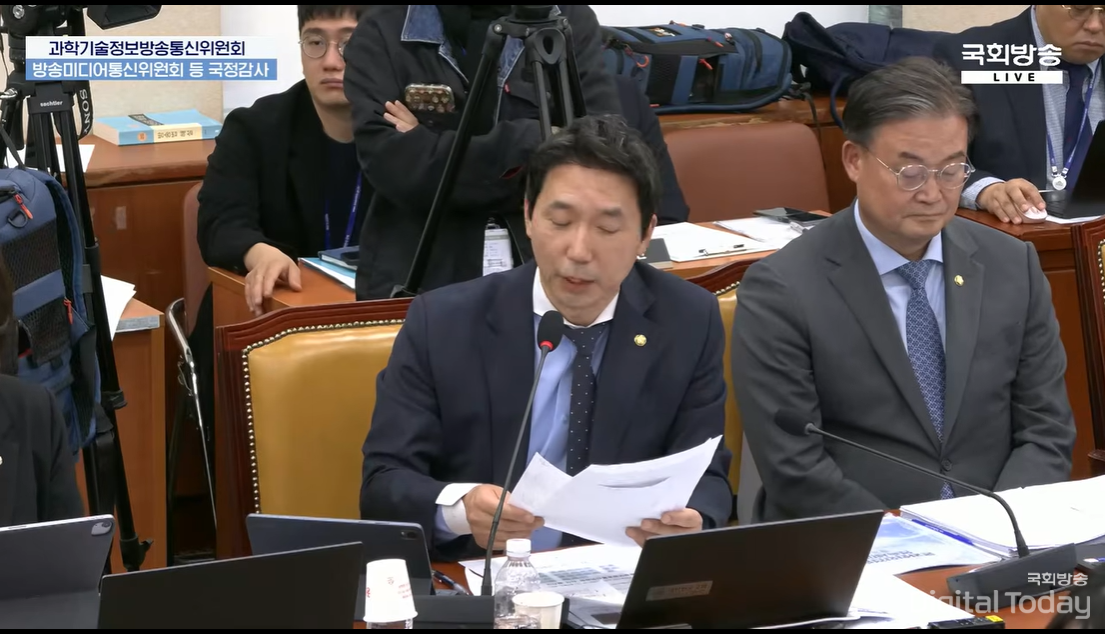
Lee Jung-heon (이정헌), a lawmaker from the Democratic Party, told a parliamentary audit of the National Assembly's Science, ICT, Broadcasting and Communications Committee on Monday that regulation must not miss overseas operators and concentrate only on domestic ones. He urged improvements to the youth protection system for short-form dramas.
According to Lee, South Korea has grown into the world's fourth-largest short-form drama market by monthly revenue as of January this year, after the United States, Japan and Canada. Revenue last year totalled 620 billion won for DramaBox, whose operating company is based in Singapore, and 390 billion won for DramaWave, while domestic operator Vigloo was estimated at about 10.2 billion won.
Under the current Act on Promotion of Information and Communications Network Utilization and Information Protection, providers and intermediaries of media harmful to youths above a certain size must designate a youth protection officer. But among short-form drama companies, only 1 domestic operator is included in the designation requirement, Lee said.
Lee said the commission uses private panel surveys focused on Android users when judging an operator's size. He also said it assesses size based on monthly users rather than the legal standard of the daily average number of users over the previous 3 months. He said such survey methods are the reason overseas operators are being left out of regulation.
Reviews of short-form drama content and related advertising were also found to be inadequate. Lee said sexually suggestive content and advertising were spreading, but the number of related reviews was 0.
Ko Kwang-heon, chairman of the Broadcast Media Communications Deliberation Committee, said it would carry out focused monitoring and set a period to concentrate reviews. He said it would analyse the results and report them. He added that jurisdictional issues related to content ratings made it difficult to conduct direct reviews in some areas.
Kim Jong-cheol, chairman of the Broadcast Media Communications Commission, said it would thoroughly check items such as changes to survey methods to reduce blind spots. He said it would consult related agencies and take steps to ensure there were no blind spots.
 Son Seul-gi
sageson@d-today.co.kr
Son Seul-gi
sageson@d-today.co.kr