
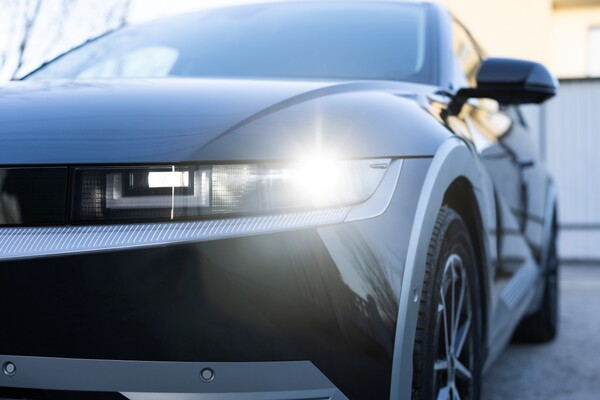
[DigitalToday reporter Jinju Hong (홍진주)] The U.S. government is beginning a process to comprehensively overhaul vehicle headlight regulations to fit the 2026 environment.
On Oct. 8 local time, IT outlet Ars Technica reported that the National Highway Traffic Safety Administration (NHTSA) plans to start a consultative rulemaking process to rewrite FMVSS 108, the lighting provision within the Federal Motor Vehicle Safety Standards.
The revision aims to address long-standing delays in lighting regulation in the U.S. market. The current standard does not sufficiently allow the introduction of the latest safety lighting technologies. Jonathan Morrison, an NHTSA official, said the current standard is preventing automakers from applying the latest lighting technologies that can improve safety. He said the agency will bring together experts and stakeholders to modernise the standard and also address potential causes of glare. He said this collaborative approach will help fix outdated regulations, encourage innovation and improve road safety.
U.S. headlight rules have been viewed as conservative compared with those in Europe or Japan. In the past, FMVSS effectively allowed only basic high beams and low beams, while other adaptive headlight technologies were not reflected in the system. Meanwhile, lighting technology evolved from lasers to LED-based precision control. Technology that controls individual pixels to block only the areas where light would directly hit oncoming vehicles has spread, but adoption in the United States has been slower due to regulatory barriers.
Talk of revising the rules is not new. In 2013, in response to a Toyota petition, NHTSA said it would begin rulemaking, but it took another 5 years for a draft rule for review to emerge. At the time, NHTSA also examined adopting European standards, but concluded there was not enough time to change beam patterns in situations where adaptive driving beams fail to detect other vehicles early enough, such as at intersections or on curved roads.
Differences in regulatory approaches between the United States and Europe also played a role. Europe uses a type-approval system in which authorities conduct tests and grant sales approval. The United States, by contrast, has a structure in which automakers self-certify compliance with FMVSS and face penalties if that is later found to be false. NHTSA opted to set separate standards, viewing European-style glare tests as potentially too subjective under a self-certification system.
A policy change did take place in 2022. After the final rule was established, vehicles equipped with active beam matrix LED headlights began to be sold in the United States. Even with the same technology, however, there were cases in which functions were limited compared with vehicles sold in Europe. Audi's large sport utility vehicle was cited as a representative example.
NHTSA has set out broader direction in this revision. It includes harmonising U.S. standards with global standards while reflecting technologies such as LEDs, ambient light sensors, automatic high beams and replaceable light sources in the rules. Revising test procedures for lenses and optical parts, and measures to more precisely set headlight aiming angles, are also under review. At the same time, it plans to strengthen glare-suppression standards so that new technologies do not obstruct other drivers' vision.
Once the process is completed, U.S. vehicle lighting rules are more likely to shift toward broader acceptance of the latest hardware and control technologies. As a result, automakers may need to adjust lighting designs that had functions separately limited because of U.S.-specific specifications. NHTSA, however, is focusing on meeting standards that prevent dazzling other drivers while expanding the use of new technologies.
 Jinju Hong
hongjj@d-today.co.kr
Jinju Hong
hongjj@d-today.co.kr