
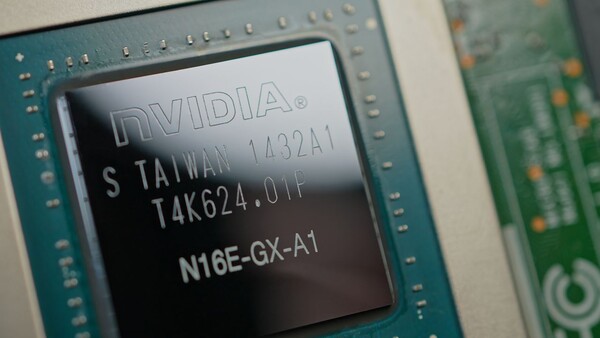
As Nvidia graphics processing units (GPUs) become a core resource for artificial intelligence (AI) infrastructure, companies are rapidly changing how they procure them. Firms that relied on large cloud providers such as Amazon Web Services (AWS), Microsoft Azure and Google Cloud are moving to secure compute capacity by also using neoclouds, online marketplaces and direct purchases of their own equipment.
CNBC reported on Oct. 10 that as AI computing demand continues to outstrip supply, companies are using multiple channels at the same time to secure GPUs. With supply shortages and rising prices overlapping, a broader push is spreading to diversify procurement sources rather than rely on a single provider.
Rising demand is also reflected in Nvidia's earnings outlook. Nvidia set quarterly revenue guidance for the October quarter at $108 billion. That is up 89 percent from a year earlier. As demand for AI infrastructure rises, the number of providers supplying GPUs has also increased rapidly. Market research firm SemiAnalysis counted 323 providers offering Nvidia GPUs as of September. That was a sharp increase from 209 less than 11 months earlier.
Nvidia disclosures show that the number of customers accounting for 10 percent or more of accounts receivable rose to 5 in the July quarter from 3 in January. The analysis is that while GPU demand is concentrated among a small number of large customers, the companies seeking to secure them and the supply channels are also diversifying.
Large cloud providers remain a main option for companies. AWS, Microsoft and Google are leading the generative AI market on the strength of large-scale infrastructure and stable service operations. AWS and Microsoft accounted for 59 percent of the cloud infrastructure market in 2025, Gartner said.
For software companies serving enterprise customers, reliability and stability of infrastructure are particularly important. Bindu Reddy (바인두 레디), chief executive of AI assistant startup Abacus, said that to provide services to enterprise customers, the underlying infrastructure needs to be Azure.
But big cloud providers alone are finding it harder to handle surging demand. Gartner's Hardip Singh (하딥 싱) said large providers can give trust to enterprise customers, but do not always have as many GPUs as needed. Amazon CEO Andy Jassy (앤디 재시) also said it will be difficult to handle all expected demand this year and that supply shortages could continue until 2027.
Neoclouds are filling that gap. Neoclouds are specialist cloud providers that offer services centred on GPUs and AI computing resources. With more flexible contract terms and more granular supply methods than large cloud providers, they are emerging as an alternative for AI companies.
AI infrastructure company Modal CEO Erik Bernhardsson (에릭 베른하르드손) said it initially used large cloud providers but later moved to major neoclouds, and now uses 25. He said it may be possible to secure hundreds and as many as 1,000 GPUs, but the amount his company needed was much larger.
Mark Boroditsky (마크 보로디츠키), chief revenue officer at Netherlands-based neocloud company Nebius, said there were cases in which some large cloud providers asked it to take customers they could not easily serve themselves. That suggests neoclouds are also taking on a role that compensates for supply gaps at large providers.
Neoclouds' strength lies in flexibility of supply and contracts. Some providers offer GPUs in relatively small units without prepayment or long-term contracts. But the more demand concentrates on a provider, the more it may require prepayment or take months before GPUs are actually up and running.
CoreWeave Vice President Chen Goldberg (첸 골드버그) said it is not possible to provide 10,000 GPUs to a new customer in a single day. CEO Mike Intrator (마이크 인트레이터) also said short-term GPU supply capacity is effectively sold out. That means neoclouds are emerging as an alternative, but they too are not free from shortages.
Companies that need GPUs immediately are also seeking smaller providers or suppliers based in specific regions. Runpod CEO Zen Lu (젠 루) said supply capacity is tight and that relationships with suppliers are among the most sensitive information for companies like his. Massed Compute co-founder and chief technology officer Sunny Smith (서니 스미스) said customers often try to secure capacity commitments in advance when they expect prices to rise.
A model has also emerged in which customers buy GPUs directly and then use cloud infrastructure. Oracle offers a model that lets customers bring their own GPUs into Oracle Cloud to run them. Oracle Chief Financial Officer Hilary Macxon (힐러리 맥슨) said the bring-your-own-equipment approach can help maintain or improve margins and raise return on invested capital.
This approach could be an alternative for companies that have capital to buy GPUs but lack power, data centre space and specialised staff. That is because they can directly own equipment while reducing some of the burden needed to operate infrastructure.
Moves are also emerging to secure large GPU capacity through long-term contracts. SpaceX agreed to provide GPU capacity to Google and Reflection, and in May it signed a GPU rental contract worth $1.25 billion per month with Anthropic through mid-2029. SpaceX Chief Financial Officer Bret Johnsen (브렛 존슨) said the current economics have reduced the payback period for investment in new computing facilities to less than 1 year.
Companies are also continuing to install GPU servers in their own data centres. Vlad Rojanovic (블라드 로자노비치) of Lenovo Infrastructure Solutions Group said companies are increasingly asking about ways to bring AI into in-house environments. Dropbox and Evercore are also using their own data centres or directly owned GPUs. Evercore CEO Charlie Giancarlo (찰리 지안카를로) said it is advantageous to secure multiple procurement channels in an environment of high price volatility.
The problem is that GPU prices are also rising rapidly. Data compiled by Orion shows the hourly spot price of an Nvidia B200 GPU has more than doubled since March. The channels to obtain GPUs are diversifying, but supply shortages, rising prices and the burden of prepayments and long-term contracts remain factors that raise procurement costs for companies.
As competition to secure AI infrastructure intensifies, corporate strategies are also moving away from reliance on a single method. The trend is expected to continue of securing needed compute resources by combining the stability of large cloud providers, the flexibility of neoclouds, and the control offered by direct purchases and in-house data centres.
 Jinju Hong
hongjj@d-today.co.kr
Jinju Hong
hongjj@d-today.co.kr