
As power demand from artificial intelligence (AI) data centres surges, battery energy storage systems (BESS) have become more cost-competitive than natural gas-fired gas turbines, a report showed. With competition to secure power pushing up turbine prices and worsening supply delays, power supply models that combine solar power and batteries are emerging as an alternative.
On Oct. 9, TechCrunch reported that energy consultancy Wood Mackenzie analysed that the cost of four-hour duration batteries was lower than open-cycle gas turbines in all 43 markets it studied. As AI spreads and data centres consume more electricity, the cost and time needed to secure generation equipment have emerged as new variables.
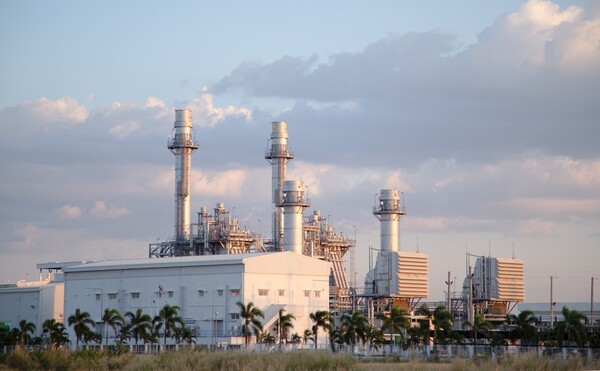
Data centre developers have considered natural gas generation equipment a key option because it can respond quickly to power demand. Open-cycle gas turbines, in particular, have a simpler structure than combined-cycle turbines and can be built relatively quickly, so they are used as peaking plants that run during periods of concentrated demand.
But as competition to build AI data centres accelerates, demand and prices for gas turbines are rising together. Even open-cycle gas turbines take 2 to 4 years to procure, and the waiting period for combined-cycle turbines has extended into the early 2030s, the report showed. Supply bottlenecks are increasing the cost burden for new natural gas generation equipment, changing the economics of existing power-generation approaches.
By contrast, battery energy storage systems are improving their competitiveness on cost. Wood Mackenzie forecast that the cost of battery-based power will continue to fall, while the cost of turbine-based generation will rise over the coming decades. That is why batteries are emerging as an option that can go beyond a simple auxiliary facility and replace gas peaking plants in markets where power demand is surging.
Among new power sources, solar power was found to have the strongest price competitiveness. Wood Mackenzie assessed solar as the cheapest new power source in every market surveyed. Combining solar generation with battery storage can also increase flexibility in power supply by storing electricity produced during the day and using it during periods of high demand.
In North America, however, tariffs and import restrictions are adding to solar power costs. Wood Mackenzie analysed that related policies are putting pressure on solar prices. Still, large-scale solar projects were assessed as having relatively more capacity to withstand price shocks.
U.S. tax support policies are also a variable affecting project costs. Projects that begin construction or are completed before the end of 2027 can keep tax credits under a safe harbour provision of the so-called "One Big Beautiful Bill". As a result, projects totalling 168 gigawatts (GW) were found to be largely protected from short-term price shocks.
By region, the competitiveness of battery storage was also clear. Wood Mackenzie forecast that in the Middle East and Africa, the cost of four-hour duration batteries will be 33 percent lower than gas peaking generation by 2035. It said batteries can replace gas peaking plants across all gas markets in the region based on cost competitiveness.
China's energy storage costs were tallied at a level 55 percent lower than neighbouring countries. Differences in regional supply chains and equipment costs are also affecting the economics of energy storage systems.
Ahmed Jamil Abdulla (아메드 자밀 압둘라), a senior analyst at Wood Mackenzie, said in a press release that the shift in economics between batteries and gas turbines is decisive and that the cost gap will widen further.
As the race to secure power for AI data centres continues, criteria for choosing generation equipment are also changing. Gas turbines remain an option for stable power supply, but high equipment prices and long procurement periods are weighing on decisions. Moves to combine solar power and battery storage to cut electricity costs and secure supply flexibility are expected to expand.
 Jinju Hong
hongjj@d-today.co.kr
Jinju Hong
hongjj@d-today.co.kr