
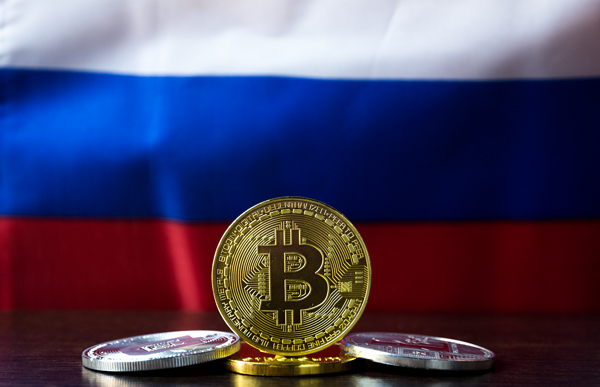
Russia is pushing a plan to require banks to include customers' cryptocurrency holdings in official certificates.
Cryptopolitan, a blockchain media outlet, reported on Sept. 30 that the Central Bank of Russia (CBR) has issued an amendment that would require commercial banks and financial firms to include customers' cryptocurrency and digital financial asset information in various balance certificates they issue.
The documents covered include certificates related to customers' payment accounts and bank deposits. Such documents are typically used when balances must be submitted to other institutions, and are also attached to income and asset declarations by civil servants and public-sector workers. The central bank also required the inclusion not only of cryptocurrencies but also of “digital financial assets” as defined by Russian law. This includes tokens issued on private blockchains or tokenised securities.
The move is based on the Law on Digital Currency and Digital Rights, which took effect on Sept. 1. The law is Russia’s first comprehensive cryptocurrency regulatory framework. It legalised investment, trading and exchange with fiat currency, while banning their use as a domestic means of payment.
The new system allows cryptocurrency trading but sets limits on investment and restrictions on custody and transfers. Both companies and individuals can buy and sell cryptocurrencies, but non-qualified investors are limited to purchases of less than $4,000 a year per broker, or about 5.4 million won. Holdings must be placed with state-approved digital asset custodians and cannot be moved to non-custodial personal wallets managed directly by users.
Digital assets can be used for cross-border remittances and overseas payments. But to be recognised as a legal transaction in Russia, all transactions must be carried out through approved platforms.
Oversight is also split among agencies. The central bank oversees the registration and authorisation of market participants, compliance standards and investor eligibility requirements. Rosfinmonitoring screens for suspicious money flows, and the Federal Tax Service (FNS) checks whether cryptocurrency investors have paid taxes. Russian residents must separately report transactions linked to addresses not managed by domestic custodians.
The amount of digital assets held in Russia is estimated at about $44 billion. Penalty standards for illegal distribution and other violations are due to be set by summer 2027. The mandatory bank reporting is therefore seen as a follow-up step that ties transaction routes, custody methods and tax reporting into a single system.
Amid this trend, Russia is also rolling out the digital rouble while narrowing the scope for using cryptocurrencies. The digital rouble began general use in early September. Russia has brought cryptocurrencies into the formal system for the first time, but is setting rules that tightly restrict actual use. A key point to watch is how detailed the secondary regulations become on the scope of bank reporting, customer identification standards and the severity of sanctions for violations.
 Yoonseo Lee
yslee@d-today.co.kr
Yoonseo Lee
yslee@d-today.co.kr