
[DigitalToday reporter Jinju Hong] In the crypto hardware wallet market, how clearly users can verify transaction details and how they can recover assets after losing a device are emerging as key selection criteria, beyond the number of supported coins.
On Sept. 30 (local time), blockchain media outlet Cointelegraph compared major hardware wallets by criteria including security, connectivity, usability and recovery options.
A hardware wallet is not a device that stores cryptocurrency itself. It keeps the private keys needed to approve transactions separated from the external environment. The key is to reduce the chance that private keys are directly exposed even if a smartphone or PC is infected with malware.
Still, using a hardware wallet does not block every attack. Assets can be lost if transaction information is not sufficiently shown on the device screen or if a user directly approves a malicious transaction. The same applies if a recovery backup is leaked.
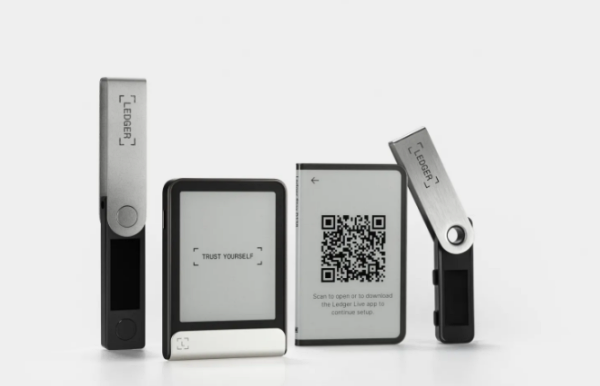
Differences between products were especially pronounced in usability. Ledger's Stax has a 3.7-inch e-ink touchscreen, but tests flagged input lag. The manufacturer also explained it as a phenomenon stemming from the curved screen structure. An assessment also said response speed was so slow that repeated mistypes occurred during the PIN entry process.
In some cases, relatively cheaper touchscreen models provided a better input experience. Trezor's Safe 7 highlights a color touchscreen and open-source software as key features. Ledger differs in that it cannot fully disclose parts of its software because it uses a security-chip structure.
Still, products from both makers support thousands of digital assets, can be linked with third-party wallets, and provide management apps for mobile and PC. There was no major difference in basic usage scope.
Connectivity also affects product choice. Models that support both Bluetooth and USB include Ledger Stax, Flex, Nano Gen5 and Nano X. BitBox02 Nova Multicoin offers Bluetooth connectivity and a method to store private-key backups on a microSD card. The backup card, however, must be kept safely separate from the device.
If price is a priority, SafePal X1 is also cited as an option. It is a Bluetooth wallet that uses a full keypad and a black-and-white interface and supports more than 200 blockchains. Its usual price is about $70, but it was introduced as currently being sold for about $29.99.
Among devices that support only wired connections, Ledger Nano S Plus, Trezor Safe 5 Universal, Safe 3 Universal and BitBox02 Multicoin were compared. Safe 5 Universal uses a color touchscreen, while Safe 3 Universal adopts a monochrome screen and physical buttons. Functions are similar, but in transaction verification and input, touchscreen models had a relatively simpler structure.
There are also QR code-based hardware wallets. SafePal S1 and S1 Pro and Engrave Zero exchange transaction information via QR codes without direct data connections via USB or Bluetooth.
But the QR code method itself does not guarantee transaction safety. Users still need a process to confirm for themselves whether a transaction is actually the one they intend to approve. Engrave Zero is an air-gapped wallet in a smartphone-like form factor and uses a fingerprint sensor as an element of randomness in authentication and key generation.
There are also NFC card-type products without screens. Tangem reduces complex operating steps by having users tap the card to a smartphone. But because there is no screen, the device itself has limits in separately verifying transaction details or warning about incorrect transactions.
Recovery methods also differ by product. Tangem offers a choice between a method that generates keys inside the card without a recovery phrase and a method that generates a recovery phrase in the app and then sets up the card. Whatever method is used, it is important to manage it so that backup information is not exposed.
Users who hold only bitcoin may also consider dedicated hardware wallets. Some makers, including Trezor and BitBox, offer bitcoin-only models. The approach reduces the attack surface by removing support for other cryptocurrencies, but transaction verification, backup protection and firmware update management remain equally important.
Among bitcoin-only products, Coinkite's Coldcard series recently drew attention over security issues. Coinkite warned in July that it had found a vulnerability in which certain Coldcard firmware could generate wallet keys in a way that is easy for attackers to guess. Multiple models and software versions were reported to have been affected.
After that, Alex Thorn of Galaxy Research estimated that the vulnerability led to about 1,789 BTC being stolen from 8,865 addresses. The scale of losses was calculated at about $114.7 million at the time.
Coinkite instructed affected users to install patched firmware, then create a new wallet and move their bitcoin. It also explained that a firmware update alone cannot safely reverse private keys that were already generated in the vulnerable way.
When choosing a hardware wallet, it is difficult to judge a product based only on the number of supported coins or the price. Users should also consider how clearly they can verify transaction details on the device screen, whether the connectivity method fits their usage environment, and how they can protect recovery measures against loss or failure.
A higher price or more features in a hardware wallet does not automatically guarantee stronger security. Even after choosing a product, it is important to keep checking the maker's security notices, firmware updates and recovery procedures.
 Jinju Hong
hongjj@d-today.co.kr
Jinju Hong
hongjj@d-today.co.kr