
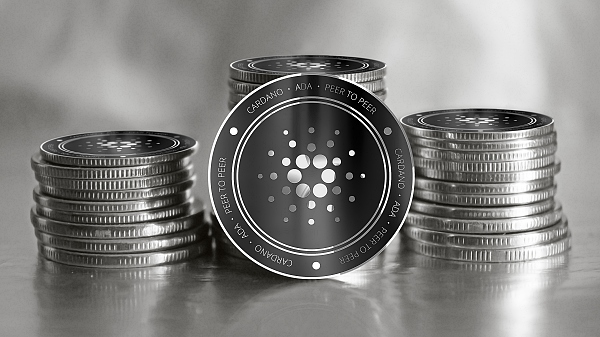
Cardano (ADA) is drawing renewed attention as a long-term altcoin to watch, backed by community-led governance, a scalability roadmap and an expanding DeFi ecosystem.
Decrypt, a blockchain media outlet, reported on Sept. 30 local time that Lucky (럭키), a Web3 founder who has supported bitcoin (BTC) since 2015, recently cited Cardano as an altcoin he is watching, along with ethereum (ETH), solana (SOL), chainlink (LINK), monero (XMR), sui (SUI) and bittensor (TAO). He focused on development progress that could affect the network's long-term competitiveness rather than short-term price moves.
One factor Lucky highlighted was changes in Cardano's governance. After the Chang hard fork, Cardano is shifting to expand the community's role in network decision-making. Community participants are gaining more influence in decisions on protocol upgrades, treasury spending and the network's future direction.
In the Cardano ecosystem, the Van Rossum hard fork, an upgrade also known as protocol version 11, was approved earlier this year. The upgrade is significant because it was the first protocol upgrade on Cardano to receive full community approval. Lucky also explained that such governance changes are one reason he continues to watch Cardano.
Improving scalability is also a core pillar. Cardano is pushing to increase throughput, centered on Ouroboros Leios for Layer 1 scaling and Hydra as a Layer 2 solution.
Ouroboros Leios aims to boost transaction throughput by increasing parallel processing of network activity, with a mainnet deployment planned for December 2026. Cardano plans to expand network capacity while maintaining its existing security and decentralisation characteristics.
Hydra, a Layer 2 infrastructure, aims for fast and low-cost transaction processing. Cardano said Hydra demonstrated the ability to process 1,000,000 transactions per second at a Doom tournament. The figure, however, was shown in a specific test environment and should not be interpreted as equivalent to the overall throughput of the mainnet.
Expanding the DeFi and application ecosystem is also a key development direction for Cardano. Along with building governance and scalability infrastructure, Cardano is widening its use into decentralised applications and on-chain finance.
Major ecosystem participants are promoting Midnight, which features private smart contracts and selective disclosure functions, as a new channel to bring in users. The push aims to secure use cases different from existing blockchain ecosystems through selective disclosure features that take account of privacy protection and the regulatory environment.
Cardano's bitcoin DeFi initiative is also drawing attention. RealFi is set to launch its mainnet on Oct. 1, and the Cardano ecosystem is pursuing ways to bring capital held but unused by bitcoin holders into DeFi.
Some observers say that if such projects begin operating in earnest, they could affect Cardano's DeFi activity and the scale of on-chain funds. Whether it leads to actual ecosystem growth will need to be confirmed through indicators such as user and developer inflows, transaction volume and total value locked (TVL).
Recent interest in Cardano is focused on changes to the network itself rather than short-term price forecasts. With a community-led governance shift, development of Layer 1 and Layer 2 scaling technologies, and expansion of DeFi and application ecosystems under way at the same time, development results and actual usage are being cited as key points to watch.
 Jinju Hong
hongjj@d-today.co.kr
Jinju Hong
hongjj@d-today.co.kr