
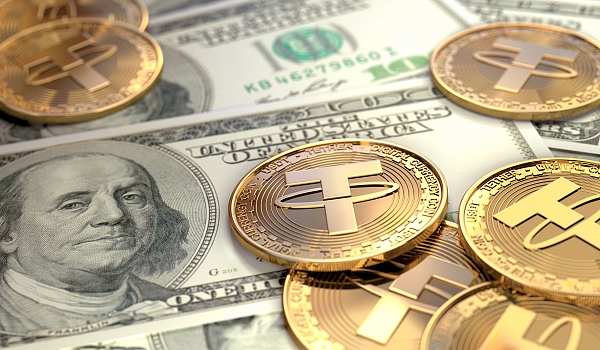
U.S. Senate investigators from the Democratic side said many cryptocurrency wallets designated for sanctions or seizure in connection with Iran and affiliated forces used Tether's stablecoin USDT. Tether said it is working with U.S. authorities to freeze sanctioned wallets and stressed that funds can be traced.
According to blockchain media outlet Decrypt on Sept. 30, Democrats on the U.S. Senate Permanent Subcommittee on Investigations said an analysis of 846 wallets linked to Iran and affiliated forces showed 84 percent used USDT exclusively or mainly.
The report is titled "Tether Tied to Terrorism". It includes results from an analysis of blockchain transaction records of wallets designated by the U.S. Treasury's Office of Foreign Assets Control (OFAC) and Israel's National Bureau for Counter Terror Financing from June 2021 to August 2026.
It found that 87 percent of 757 wallets designated by Israel mainly transacted in USDT. Among 101 wallets designated by OFAC, 57 percent mainly used USDT.
The subcommittee also flagged the scale of transactions. The report said Alireza Derakhshan and Arash Estaki Alivand, identified as Iranian oil smugglers, moved more than $603 million in USDT from 2021 to 2025. It said there were indications the network was linked to Hezbollah, the Houthis and Iranian financial institutions, and was also used in deals involving drones and military equipment.
Senator Richard Blumenthal said in an interview with CNBC that USDT served as a "highway" for Iran to evade sanctions. He said it was used not only for sanctions evasion but also for money laundering and illegal transactions, and asked the U.S. Treasury and Justice Department to investigate Tether.
Tether's sanctions compliance system was also cited as a key issue in the report. The subcommittee said Tether did not comprehensively and consistently freeze wallets designated by counterterrorism agencies until before 2024. In one case, the report said, about $34.6 million in funds moved even after a wallet was designated for sanctions.
It also pointed to Tether describing compliance with OFAC sanctions as "voluntary" and saying it follows OFAC "guidelines" on its own. The subcommittee compared this with the legal obligation of U.S. financial institutions to comply with sanctions rules.
The report also said Hamas shifted from previously mixing bitcoin and various tokens to promoting USDT-centric fundraising.
Blumenthal sent letters to Treasury Secretary Scott Bessent and Deputy Attorney General Todd Blanche requesting an investigation into Tether's anti-money-laundering and sanctions compliance practices. He said the administration's oversight of crypto companies has weakened U.S. national security interests.
The report also mentioned the governance of Cantor Fitzgerald, a major investor in Tether. The subcommittee cited a March Bloomberg report and described that Tether lent funds so that Howard Lutnick's children could acquire a stake during his stake disposal process.
The Senate investigative subcommittee said it requested materials from Tether in June on how it handles Iran-related transactions. It said Tether confirmed receiving the request but did not respond by the time the report was released.
In a separate statement, Tether highlighted its cooperation record with U.S. authorities. Tether said that in 2026 it froze about $550 million from wallets linked to Iran's central bank. It said it froze more than $344 million in April and more than $130 million in July.
Tether said it has worked with more than 340 organisations in 67 countries and frozen more than $4.9 billion in assets. Paolo Ardoino (파올로 아르도이노), Tether's chief executive, said public blockchains provide authorities with far greater visibility into fund flows than cash. The statement did not directly mention the Senate report or its findings.
U.S. regulators are also watching the potential use of stablecoins in illicit finance. The Financial Crimes Enforcement Network (FinCEN) said in a May alert that among Iran's stablecoin methods was issuance and transfers between large stablecoin issuers.
The U.S. Treasury expanded its authority in August to sanction any foreigner operating in Iran's digital asset sector. As a result, controversy over Iran-related transactions involving USDT is expected to expand beyond the movement of funds in specific wallets to questions over stablecoin issuers' responsibility for sanctions compliance and the scope of U.S. oversight.
 Jinju Hong
hongjj@d-today.co.kr
Jinju Hong
hongjj@d-today.co.kr