
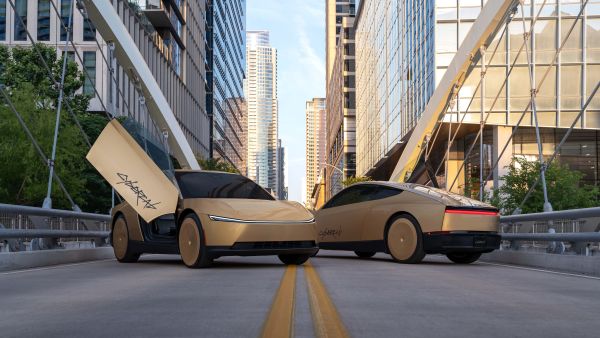
Tesla appears to be considering offering robotaxis to customers who visit service centres for vehicle repairs, instead of its existing loaner vehicles. It is not confirmed whether the idea will be adopted, but related functions were hinted at in the latest app code.
InsideEVs, an electric-vehicle outlet, reported on Sept. 9 that Tesla's latest app code includes code related to a function that would provide robotaxis as transport for service-centre customers.
The code includes an item called 'sv_transport_robotaxi', along with 'sv_transport_paid_loaner', 'sv_transport_e_bike' and 'sv_transport_bolt'. It suggests robotaxis are being considered as one of several transport options for service customers, alongside existing loaners, electric bicycles and ride-hailing services.
Tesla currently uses methods such as providing loaner vehicles or issuing Uber credits to customers who leave their cars at service centres. If robotaxis are introduced, the operating structure could change to assigning vehicles only when customers actually need to travel.
In particular, Tesla could use service-centre reservation information, vehicle location and customer location to summon a robotaxi in line with check-in and pick-up times. That would provide transport only when needed, instead of assigning a single loaner vehicle to a customer for the whole day.
From Tesla's perspective, it also has the advantage of increasing vehicle utilisation. The robotaxi could carry other passengers and generate revenue when the customer is not using it. That would reduce costs for Uber credits and running loaners, while also increasing the utilisation rate of autonomous vehicles.
A change in customer experience is also expected. Tesla's service-centre loaner policy varies by location, with some customers receiving a loaner vehicle, while others receive Uber credits or no separate transport option. If robotaxis become an official transport option at service centres, Tesla could link customer travel from vehicle drop-off to pick-up through its own network.
Even if related functions were added to the app code, that does not mean an actual service launch is confirmed. Tesla may have added the code in advance while preparing a long-term operating plan, and the function may not be released.
Autonomous driving regulations are also a variable. Tesla's robotaxis would not operate under the same conditions in all regions, and some areas require safety personnel for autonomous vehicles. As a result, even if robotaxis are introduced for service-centre customers, the option is likely to be applied on a limited basis at first, centred on regions where robotaxi operations are in place.
The move suggests Tesla may be looking to use robotaxis not just as a ride service but as a way to connect customer experience after vehicle sales and servicing. It is also interpreted as a strategy to combine Tesla's autonomous driving business and service operations, as it could reduce service customers' travel costs while minimising robotaxi idle time.
Attention is focused on whether Tesla will actually introduce robotaxis as transport for service-centre customers and, if it does, which regions it will apply the option to first.
 Jinju Hong
hongjj@d-today.co.kr
Jinju Hong
hongjj@d-today.co.kr