
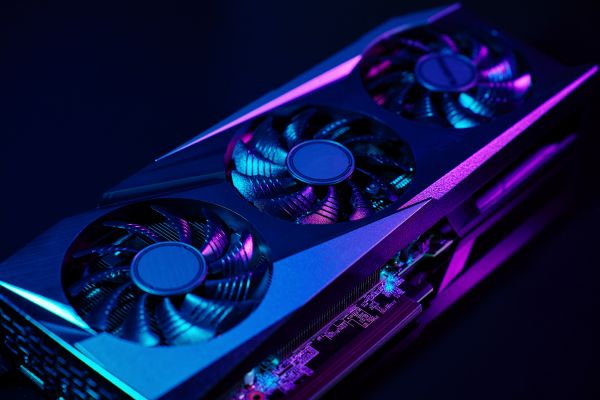
A Japanese retail distributor warned of possible additional increases in graphics processing unit (GPU) prices. It said GPU prices could rise again as a memory supply shortage lifts prices for video memory (VRAM) used in graphics cards.
On Sept. 8, foreign media outlets including IT site TechRadar reported that Japanese retailer Applied advised consumers planning GPU upgrades to buy as soon as possible. It was not specifically known which GPU models the price increase would apply to.
Japan's GPU market is already seeing price hikes. Retailers in the Akihabara area warned in August that GPU prices could rise by about 20 percent to 30 percent from previous levels. With talk of price increases also emerging among Nvidia board partners, similar adjustments could appear outside Japan. It is unclear how far any increase would extend across regions and products.
A memory supply shortage affecting PC components broadly is cited as a key factor behind rising GPU prices. As VRAM prices rise, pressure is increasing on GPU manufacturing costs and selling prices. The PC hardware market has been continuously affected by memory shortages in 2026, making it difficult to find reasonably priced upgrade parts.
In the United States, retail prices for major GPUs are far above the manufacturer suggested retail price (MSRP). Nvidia's GeForce RTX 5080 is selling at Best Buy for $1,699, or about 2.3 million won. The GeForce RTX 5060 has an MSRP of $299, or about 400,000 won, but its actual selling price is about $450 to $500, or about 600,000 to 670,000 won.
AMD products are in a similar situation. The Radeon RX 9070 XT has an MSRP of $599, or about 800,000 won, but Gigabyte overclocked models are selling for as much as $929, or about 1.25 million won. The Radeon RX 9060 XT 16GB is also selling for at least $200 to $300, or about 270,000 to 400,000 won, above MSRP, with third-party GPU prices generally high at major retailers.
The memory supply shortage is not expected to be resolved quickly. Samsung Electronics and industry analysts expect the shortage could persist until after 2027. As a result, PC component price rises and supply instability could continue for some time.
Some say consumers should be cautious about buying products right away based only on the possibility of GPU price increases. Many third-party Nvidia GeForce and AMD Radeon GPUs are currently being sold at excessively high prices by major retailers. In particular, existing PC users looking to simply replace a GPU are seen as having little need to buy at such high prices.
By contrast, consumers looking to enter the PC gaming ecosystem for the first time may consider buying a GPU. They should note, however, that 'panic buying' driven by worries about price rises could push prices up further.
Ultimately, whether GPU prices rise further depends on the memory supply shortage and related movements in VRAM prices. Attention is focused on whether the warning from the Japanese retailer will lead to actual global GPU price increases.
 Seung-a Yoo
ysah@d-today.co.kr
Seung-a Yoo
ysah@d-today.co.kr