
As generative AI cuts content production costs, text, images and video are growing rapidly. But the problem of similar posts, or posts that change only parts of others’ content, is also worsening. This is raising the value of originals that reflect direct experience and expertise.
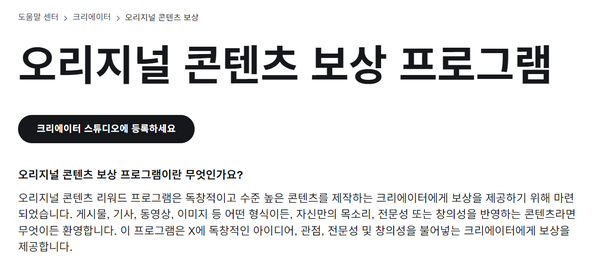
Industry officials said on Sept. 9 that social media platform X began on Sept. 8 to gradually grant existing revenue-sharing participants the right to apply for an “original content rewards” programme. Naver is also selecting creators based on content cited in AI search and on topic-specific expertise.
Both schemes present themselves as creator support, but they differ in the content the platforms seek. X is focusing on securing original posts in its ecosystem that draw user attention in the home timeline. Naver is focusing on securing experience- and expertise-based content to use as grounds for AI answers.
An analysis says creator compensation is shifting beyond distributing revenue based on views and engagement. It is becoming a tool to set the direction of content production that platforms need.
◆ No views, no rewards without originality
X ended its existing “creator revenue sharing” programme on Sept. 7.
The new programme recognises as original content posts that creators write or film and produce themselves, including text, photos, video and graphics. Commentary that adds a creator’s analysis of news and social phenomena, or presents new perspectives and context to existing information, can also be eligible for rewards.
Posts that copy others’ content or change only parts of it are excluded. It also does not recognise as original content videos that only add subtitles or filters, or content that compiles multiple posts without separate interpretation. Content produced and posted through automated methods, and false or misleading information, also cannot receive rewards.
X is not abandoning view counts and assessing only originality. Originality is the first condition for receiving rewards. Actual earnings are calculated based on “qualified impressions” generated in premium users’ home timelines. Only unique impressions count when more than half of a post appears on screen. Repeated impressions from the same account and advertising, promotion and artificial impressions are excluded.
Creators must subscribe to X Premium, Premium Plus or Premium Business. They must have secured at least 500,000 impressions from verified users in the home timeline, excluding replies, over the past 90 days. They must also have at least 500 verified followers. Even if they meet the conditions, they must pass a review to join the programme.
That means not everyone who makes original content will earn revenue. The structure rewards posts that combine originality with premium users’ attention.
This is analysed as a strategy to filter out accounts that boost exposure through copied posts and engagement-bait content, and to improve the quality of the home timeline. If similar posts fill the feed, users may find it harder to get new information, and the value of paid subscriptions may also fall.
◆ Naver wants “records AI will cite”
Naver introduced its AI search summary service “AI Briefing” in March last year. Data Naver released in May this year showed that, as of January, user-generated content on Naver such as blogs and cafes accounted for 70 percent of content cited in AI Briefing.
Naver announced in the same month a plan to invest 1 trillion won in its content ecosystem over the next 5 years. It then launched in June the AI fellowship programme “Naver Mate” for creators on blogs, cafes, Knowledge iN and Premium Content.
Naver Mate selects about 3,000 people each month by considering the number of times their content is cited in AI Briefing, topic-specific expertise and activity. Selected creators receive a basic monthly activity stipend of 300,000 won.
It separately selects 110 people as “Special Naver Mates” across 10 fields, comprising 1 representative creator and 10 outstanding creators in each field. Representative creators receive an additional 10 million won a month, and outstanding creators receive an additional 3 million won a month. Total activity support is about 20 billion won a year.
Naver said the combined total of AdPost payouts, creator earnings through Brand Connect and Naver Mate support in June was about double the level in February last year, before AI Briefing was introduced. AdPost payouts alone rose 14 percent over the same period.
But the figure is the result of adding the newly introduced Naver Mate support to advertising revenue and brand collaboration revenue. It is difficult to conclude that the entire increase is the effect of introducing AI Briefing. Naver said expanded content exposure through AI search, existing monetisation programmes and new activity support together had an impact.
Experiences of visiting travel destinations, product-use reviews, local information and everyday tips are hard to replace with general information alone. As these records accumulate, Naver can build AI answers that reflect the situations and context of domestic users.
Naver Mate is analysed as a scheme that seeks to encourage production of content needed for AI search while supporting creators. Content is cited in AI answers, creators gain exposure and stipends, and they produce more content.
Naver plans to run Naver Mate as a beta service through the end of this year and expand support to clip creators. It also plans to reflect performance of content being cited in AI tab answers in its selection criteria.
◆ Reward standards become the platforms’ “editing rules”
The compensation systems of X and Naver include standards for judging what is good content. X pays for original posts that win user attention in feeds. Naver pays for specialised user-generated content that serves as grounds for AI search.
Creator compensation can also be seen as the cost of procuring content that a platform needs. Platforms provide economic incentives for users to create content in the direction users want, rather than producing all content themselves.
Reward standards can also affect creators’ activity. On X, analysis and commentary written directly becomes more advantageous for monetisation than simple reposts. On Naver, it becomes important to consistently record experiences and information on specific topics so they are cited in AI search.
On the other hand, creators’ dependence on platforms may grow. X judges originality and qualified impressions, and Naver selects creators based on AI citations and expertise. The structure has platforms jointly deciding reward eligibility, exposure and earnings.
Detailed calculation methods have also not been fully disclosed. X has presented the conditions for qualified impressions, but has not disclosed the payout rate per impression or weighting. Naver has disclosed evaluation items, but has not disclosed the specific weights of each item in selection results.
As AI increases the amount of content, the scarcity of sources and direct experience grows. X needs feeds that users will stay on, and Naver needs information AI can use as grounds for answers. The companies’ compensation systems show platform competition moving from a stage of increasing content volume to a stage of selecting and securing the originals needed.
An industry official said, “As generative AI makes content production easier, content that can verify sources and direct experience becomes important to platforms.” The official added, “But since reward standards can influence creators’ production direction, transparency in evaluation standards also needs to increase.”
 Lee Ho-jung
lhj@d-today.co.kr
Lee Ho-jung
lhj@d-today.co.kr