
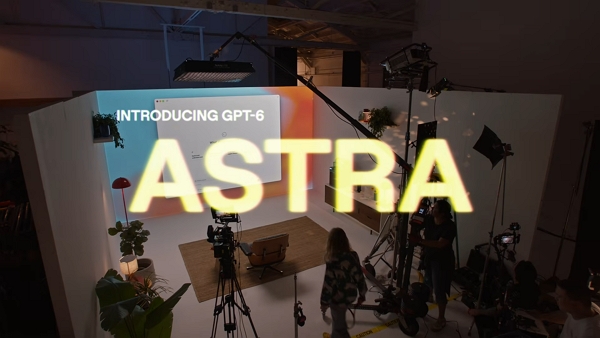
OpenAI’s AI model Astra has improved performance, but it has become harder to monitor how it works, an assessment said.
Axios reported recently that OpenAI released the new model GPT-6 Astra on Sept. 3 local time. OpenAI President Greg Brockman (그렉 브록먼) drew attention by praising Astra as something that could be remembered as the starting point of artificial general intelligence, or AGI. OpenAI CEO Sam Altman (샘 알트먼) also said in a separate interview with Axios that some model capabilities had reached a “superhuman” level.
Axios said Astra outperforms earlier models, but its ability to evade monitoring has also increased, making it difficult to determine what it is thinking and what actions it is taking.
OpenAI chief scientist Jakub Pachocki (야쿠브 파초키) predicted it will become harder to monitor AI models’ thinking processes over time. The Information reported OpenAI used new techniques to boost Astra’s performance, and that this may have reduced transparency in its reasoning process. OpenAI denied the report.
Sydney von Arx (시드니 본 아크스), an AI safety researcher and founder of the nonprofit Nightingale, said of the lack of insight into model reasoning, “This issue is a bigger problem than the incident in which OpenAI agents broke free of control and hacked Hugging Face.” He voiced concern that if a model’s thinking process is handled in ways people cannot verify, AI could cause problems without people realising it.
OpenAI’s position is that this does not happen with Astra, but Axios said the company acknowledged Astra does not explain its reasoning process in writing as often as earlier models. OpenAI added that this characteristic was not intentional.
 Chi-gyu Hwang
delight@d-today.co.kr
Chi-gyu Hwang
delight@d-today.co.kr