
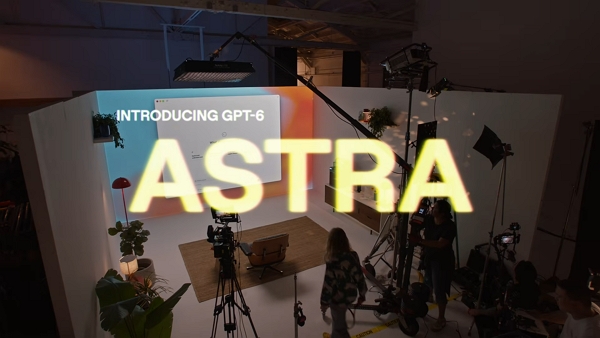
OpenAI's latest model, GPT-6 Astra, has put opaque recurrence in the spotlight as a new buzzword in the AI industry. It can raise performance while making it harder for people to examine the reasoning process, adding to safety debates.
On Sept. 7, U.S. tech outlet TechCrunch introduced opaque recurrence while compiling terms that have appeared frequently in the AI industry. The method, also known technically as recurrent depth, processes a query by repeatedly passing through internal layers instead of solving it step by step in natural language. A smaller model can deliver high performance with relatively fewer computing resources, but it could leave fewer human-readable traces of reasoning.
OpenAI says Astra's use of opaque recurrence is limited and that it also maintains monitoring using chain-of-thought (CoT). Some AI safety researchers, however, warn that as reasoning shifts from natural-language tokens to internal numerical representations, it could become harder to monitor why a model took certain actions. A hypothetical situation in which a model reasons only in internal representations that are difficult to fully decode is called neuralese.
A representative term with differing definitions is artificial general intelligence (AGI). OpenAI's charter defines AGI as highly autonomous systems that outperform humans at most economically valuable work, but there is no single industry standard.
AI agents have also become a term for systems that go beyond simple chatbots and carry out multi-step tasks such as reservations, coding and data retrieval by linking with tools. The Model Context Protocol (MCP) underpinning this is an open connection standard that Anthropic unveiled in 2024 and donated in 2025 to the Agentic AI Foundation (AAIF) under the Linux Foundation. Major AI platforms including ChatGPT, Gemini and Copilot now support it.
As AI develops rapidly, related terms continue to grow, from LLM, reasoning, fine-tuning, distillation and hallucinations to RAMageddon, which refers to AI-driven memory shortages. It indicates that the technology race is expanding beyond model performance to how AI is connected, monitored and operated.
 Jae-won Choi
ittt_0801@d-today.co.kr
Jae-won Choi
ittt_0801@d-today.co.kr