
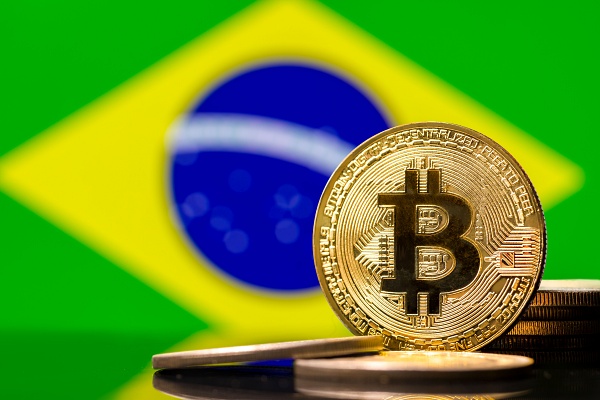
Brazilian banks are rapidly expanding digital-asset products for customers as the country’s cryptocurrency regulatory framework becomes more defined. The offerings are still limited to brokering and custody of customer trading, and banks have not moved to holding cryptocurrencies directly with their own capital.
Decrypt reported on Sept. 7, local time, that Brazil’s 2025 cryptocurrency trading value hit a record 505.5 billion reais. That was up about 433 percent from 94.9 billion reais in 2020.
Large financial groups are also widening their product lineups. Itau (Itaú) offers 15 cryptocurrencies, including bitcoin, ether and USDC, on its investment app. The largest fintech Nubank handles 28. Banco do Brasil started a direct bitcoin and ether purchase service in January and has processed more than 11 million reais in transactions.
There is still no crypto investment by banks themselves. A filing submitted to Brazil’s central bank in March showed local banks’ proprietary cryptocurrency holdings at zero. That means they hold customer assets and process trading, but do not take price and liquidity risks directly onto their balance sheets.
Clearer rules have influenced the market’s expansion. After establishing a legal framework for virtual assets in 2022, Brazil in November last year detailed licensing and capital requirements, customer-asset management and foreign-exchange rules through central bank resolutions Nos. 519, 520 and 521. Existing crypto operators must begin the central bank licensing application process by Oct. 30.
In particular, trading and exchange of fiat-linked virtual assets were included under foreign-exchange market rules. As a result, dollar stablecoins also more clearly fell within the central bank’s reporting and oversight scope.
Of Brazil’s 2025 cryptocurrency trading value, corporate transactions totaled 497.0 billion reais, accounting for 98.3 percent of the total. As a market once marked by regulatory uncertainty moves into the institutional framework, competition to secure customers between incumbent banks and specialist crypto firms is expected to intensify.
 Jae-won Choi
ittt_0801@d-today.co.kr
Jae-won Choi
ittt_0801@d-today.co.kr