
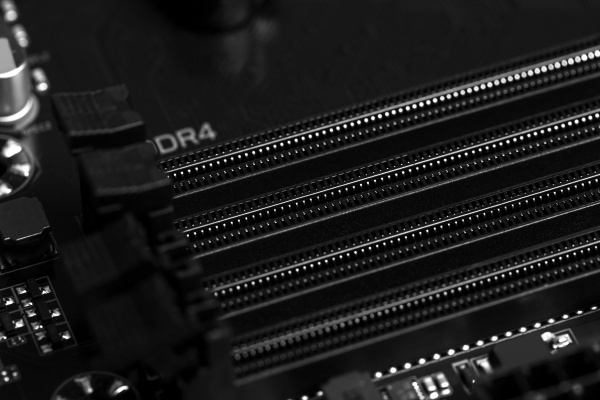
As the spread of AI data centres intensifies a memory supply crunch, Google is reusing older DDR4 memory recovered from decommissioned servers in its latest AI equipment, according to a report. With new memory production alone increasingly unable to meet surging demand for AI infrastructure, a workaround has emerged that maximises the use of existing assets.
Cryptopolitan, a blockchain media outlet, reported on Wednesday that Google is reclaiming DDR4 memory from existing servers and redeploying it to secure the memory needed for its AI infrastructure.
Nikhil Cherian (니킬 체리언), senior director of supply chain infrastructure at Google, said the company is responding by recycling DDR4 but is struggling to secure enough memory chips required for AI systems. He stressed that in an extremely tight supply environment like the current one, the most sustainable solution is for memory makers to expand production capacity faster.
Moves to extend the life of older memory are emerging across big tech, not just at Google. The aim is to avoid a situation in which AI accelerator systems that cost billions of dollars cannot operate properly due to memory shortages or rising prices.
In a document released earlier this year, Meta proposed using Compute Express Link (CXL) to use older DDR4 and newer DDR5 memory together in a single system. Kuram Malik (쿠람 말릭), vice president of product marketing at Marvell, also explained that hyperscale companies are extending the life of existing DDR4 modules using CXL controllers even after shifting servers toward DDR5.
Meta said applying the approach to some inference tasks improved server-count efficiency by up to 25 percent in a server environment numbering in the millions. In a distributed cache system, average latency fell by about 29 percent.
Still, recycling older memory has performance limits. Meta pointed out that some CXL products currently sold in the market bundle controllers and DRAM, making it difficult for companies to reuse existing DDR4 inventory as is.
Bandwidth and latency are also issues. Meta analysed that bandwidth for expanded memory via CXL is about 10 times lower than directly connected DRAM, while latency is about 60 percent higher.
To address this, Meta developed its in-house Vistara ASIC. The chip, designed on the premise of reuse, secures power efficiency and low latency, while software monitors workloads in real time and automatically turns off the function if latency exceeds the allowable range.
The problem is that memory prices and supply conditions are unlikely to stabilise in the short term. Counterpoint Research said DRAM prices in the first quarter of 2026 rose 80 to 90 percent from the previous quarter. Marvell estimated the quarterly rise in general DRAM prices at 90 to 95 percent.
As AI data centres increase, hyperscale companies' share of memory spending is expected to rise sharply. Marvell forecast that the share would rise to about 30 percent in 2026 from about 8 percent in 2023 to 2024. TrendForce also forecast that DRAM contract prices in the third quarter of 2026 would rise again by 13 to 18 percent.
Capacity expansion is also not happening quickly. ChangXin Memory Technologies is constrained to wafer production capacity of around 240,000 a month due to the impact of U.S. export controls, and its yield was estimated to be 42 percent lower than Samsung Electronics and SK Hynix.
SK Hynix has decided to invest about $38 billion in 2 new fabs, but it will take time for the supply expansion effect to fully materialise. The Y2 DRAM plant is also expected to reach the cleanroom stage in mid-2029.
The possibility of production disruptions at Micron's Taiwan plant is another variable. Two unions representing about 10,000 people in Taiwan are considering a vote in September on whether to strike over how bonuses are calculated. Micron is one of the top 3 companies leading the DRAM market along with Samsung Electronics and SK Hynix.
There are also forecasts that supply shortages will be prolonged. Kwak Noh-jung (곽노정), chief executive of SK Hynix, mentioned the possibility that DRAM supply shortages could continue until the end of 2030.
As a result, big tech companies such as Google and Meta are increasingly likely to adopt older memory reuse as a realistic measure to keep AI infrastructure running, beyond a simple cost-cutting step. As the AI race expands from securing high-performance GPUs to competing for the memory that supports them, DDR4, once classified as headed for retirement, is drawing attention again.
 Jinju Hong
hongjj@d-today.co.kr
Jinju Hong
hongjj@d-today.co.kr