
Search results for Ericsson Korea
Telecommunications & Media
Ericsson says 5G SA is core network for AI era, sets out foundation for 6G evolution
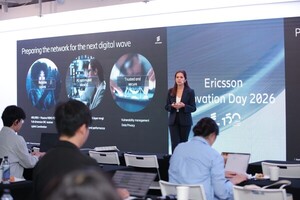
Ericsson presented 5G standalone (SA) and 5G Advanced as core foundations for AI-era networks and a pathway toward 6G. Ericsson Korea outlined network evolution, AI-RAN and integrated sensing and communication (ISAC) strategies at a media briefing in Seoul. It expects uplink traffic to rise 3 to 5 times by 2030, driven by physical AI such as AI glasses, robots and autonomous driving. Executives said differentiated connectivity, enabled by 5G SA, will be needed to guarantee service-specific performance.

Telecommunications & Media
Ericsson innovates uplink speeds, low latency to support AI networks
Ericsson is preparing for the AI era with network technologies aimed at boosting uplink speeds and reducing latency to support more effective use of AI. At a pre-MWC26 media briefing in Seoul, Ericsson Korea said 5G and 6G can evolve in a complementary way and it will support new business models. Executives highlighted 5G-Advanced, AI RAN, cloud-native architecture, network APIs and automation, and outlined plans for autonomous networks and upgraded radios.
Telecommunications & Media
Ericsson says AI RAN and 5G SA needed for rising uplink traffic
Ericsson stressed the need for AI-based radio access networks and a transition to standalone 5G as uplink traffic rises due to generative AI and real-time media consumption. At a briefing in Seoul, the company said AI RAN can learn and predict traffic patterns, automate resource optimisation and improve QoS, but requires a 5G standalone structure. It also presented global 5G SA use cases and emphasised open standards and multi-vendor integration.