
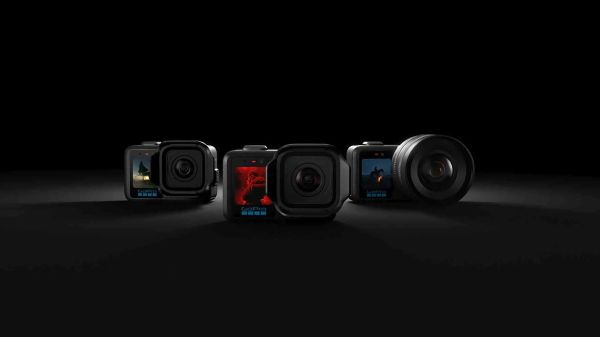
GoPro will expand into the artificial intelligence (AI) data centre and defense markets through a merger with privately held photonics company Starman Optical.
On Sept. 1 (local time), CNBC and other foreign media reported that action camera maker GoPro announced it had signed a final merger agreement with Starman Optical. GoPro shares jumped 38% immediately after the announcement.
Under the deal, Starman Optical will secure 90% of GoPro, and existing GoPro shareholders will hold the remaining 10%. GoPro shareholders will receive a total of $285 million in cash, or $1.14 per share. GoPro stock will remain listed on Nasdaq after the deal closes. The merger is expected to be completed by the end of this year.
Starman Optical is a privately held U.S. company that produces optical transceivers for AI data centres. Optical transceivers are components that enable network equipment to transmit data using light. Starman Optical plans to add these optical transceivers to GoPro's product lineup and to push to shift some production of core optical equipment to the United States. It did not disclose a specific timetable.
GoPro plans to use the merger as a turning point to expand beyond its consumer action camera business and use optical and imaging technology to move into commercial, defense and AI markets. GoPro said it holds more than 2,500 U.S. patents related to optical and imaging solutions.
GoPro Chief Executive Nicholas Woodman (니컬러스 우드먼) said, "Through this merger, I expect GoPro to grow across consumer, commercial and defense markets and to become a U.S. imaging and optical solutions company targeting national security areas related to cameras, optics and AI infrastructure."
Starman Optical also said it will combine GoPro's optical technology and intellectual property with Starman Optical's optical transceiver technology and U.S. manufacturing base to expand U.S. production of key components.
GoPro plans to repay $92 million of existing debt at the same time as the deal closes. The company said it will continue to support its existing consumer products and subscription and cloud platform after the merger, and will pursue more diversified product development alongside growth investment.
The deal comes as GoPro has faced a prolonged slump in performance and finances. Since listing in 2014 at $38 per share, its stock has fallen about 96% as competition intensified from Chinese rivals DJI and Insta360. Quarterly revenue, which was $633.91 million at the end of 2014, has fallen by more than 80% from its peak as of the most recent June quarter. Higher memory chip prices driven by increased AI infrastructure investment also raised cost burdens, and GoPro warned in June that there was substantial doubt about its ability to continue as a going concern.
Attention is also focused on the value of stakes held by major shareholders. A July 13 filing showed YouTuber Mark Fischbach (마크피셔바흐) became the largest shareholder with an 8.5% stake in GoPro. BlackRock has also filed that it holds a 6.4% stake. After the deal announcement, GoPro shares rose at one point by more than 50% to $1.33, above the $1.14 per-share purchase price.
GoPro previously said in April it would enter the defense and aerospace consulting business. The merger is seen as a strategy to reduce reliance on its existing consumer business by expanding into AI data centres, optical components and defense.
GoPro has said it will maintain its existing consumer business, meaning it is not fully abandoning the action camera business. How much revenue GoPro can secure in AI and defense markets by using its optical technology and U.S. manufacturing base after the merger is expected to be a key variable in its business shift.
 Seungah Yoo
ysah@d-today.co.kr
Seungah Yoo
ysah@d-today.co.kr