
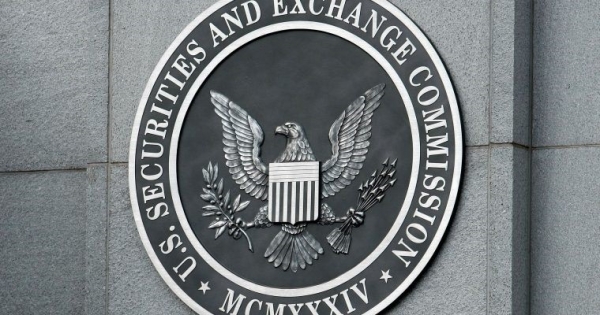
The U.S. Securities and Exchange Commission is moving to verify the substance of pre-IPO stock investment products sold by investment firms. With rising demand for investment in popular private artificial intelligence companies such as OpenAI and Anthropic, it aims to check whether such products actually hold the underlying assets.
On Sept. 1 local time, blockchain outlet Cryptopolitan reported that the SEC asked registered investment advisers to prove they actually hold the private-company equity stakes or related exposure promoted by special purpose vehicles (SPVs) under its jurisdiction.
An SPV pools funds from multiple investors to invest in stakes in private companies and other assets. It has emerged as a key channel in the recent AI investment boom because it can provide access to companies that are hard to trade directly in public markets. Stanford University's 2026 AI Index said global private AI investment in 2025 rose 127.5 percent from a year earlier to $344.7 billion. Investment related to generative AI alone was $170.9 billion.
The issue is what assets investors actually end up holding. As interest in pre-IPO stocks rises, more products have been marketed as holding stakes or exposure to those companies, but cases have emerged where the link between the underlying assets and the investment product is unclear.
OpenAI and Anthropic have also warned about unauthorised trading. OpenAI has said there are firms selling unauthorised exposure to the company not only through direct share sales but also via SPV interests, tokenised stakes and forward contracts. It warned that rights obtained through such trades may not be recognised by the company and may have no economic value for investors.
Anthropic also said any transfer of its shares requires board approval and that it does not allow SPVs to acquire its shares. As a result, even if an investment product touts access to a specific AI company, whether the underlying stake is valid must be checked separately.
The SEC has already handled similar issues through enforcement cases. On Aug. 10, it brought allegations of investor deception against Added Ventures Management and its Chief Executive Eric Munson (먼슨), among others. In that case, conduct including telling investors it held stakes in pre-IPO companies such as SpaceX and Klarna was cited as a problem.
According to the SEC, Munson is accused of falsely telling investors that a fund held private-company shares it did not actually own. Allegations were also raised that he resold pre-IPO shares to client funds at high prices, misrepresented costs and charged unapproved fees.
Such problems are also linked to tokenised securities that have been spreading recently. As exposure to private companies moves on-chain, investment products are expanding in form from SPVs to tokens. But tokenisation itself does not guarantee actual ownership or holding of the underlying asset.
Relevant SEC divisions also said in a statement on tokenised securities in January that moving securities on-chain does not itself change the application of federal securities laws.
Ultimately, the core of the SEC's review is not the name or structure of an investment product but whether the seller actually holds the pre-IPO shares it promised. With rising demand for pre-IPO stock investment in AI companies, market attention is focused on whether the SEC's verification will expand into actual enforcement.
 Jinju Hong
hongjj@d-today.co.kr
Jinju Hong
hongjj@d-today.co.kr