
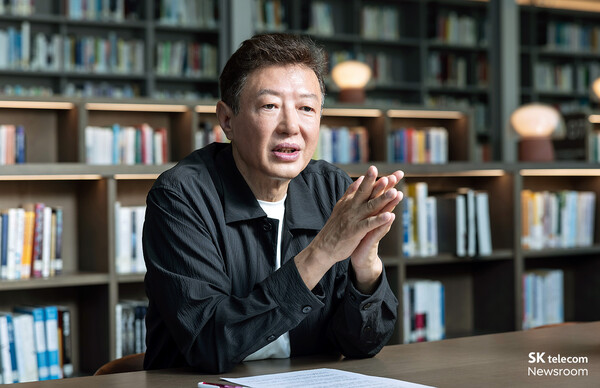
As a so-called "zero click" era opens, in which much of information search is left to AI, a diagnosis emerged that corporate information management and trust-building have become more important tasks.
Kim Nan-do (김난도), a member of SK Telecom's Customer Trust Committee, said in an SKT Newsroom interview on Wednesday that the biggest change is that consumers have begun delegating some choices and judgments they used to make themselves to AI. He said AI is taking a larger share in consumption and decision-making processes.
Kim forecast that more cases will emerge in which consumers use AI recommendations and judgments instead of comparing and clicking through search results or products one by one. He said AI will also accelerate changes in consumer behavior, just as telephones and smartphones quickly changed lifestyles.
He said "trust" will become more important in relationships between companies and customers. As AI becomes more deeply embedded in daily life, customers will accept not only AI services but also the companies and infrastructure providing them more closely.
Kim said what matters as the relationship between companies and customers grows closer is a company's sincerity. He said sincerity itself is not new, but its importance will grow even more in the AI era.
He also stressed responsibility for managing personal information alongside the expansion of personalised services. Consumers may broaden the scope of personal information they provide for convenient services, but trust that companies will manage that information safely must be a prerequisite, he said.
For SKT, which is expanding AI services, protecting customer information and securing trust are also seen as key tasks. The higher the level of personalisation, the more directly the ability to manage customer data safely can be linked to trust in the service.
Kim said if a customer trusts a particular company and entrusts information to it, there needs to be trust that the information will be properly managed. He said as acceptance of personalisation widens, demands on corporate security and information management will also grow.
He suggested that AI and humans should split roles at customer touchpoints. AI use can expand in counselling and information provision, but people need to respond directly in handling customer complaints and resolving problems. Kim said customers expect a responsible person to step forward when problems occur.
He said the customer's voice should not stop at simply handling complaints. He argued that cases and statistics accumulated in complaint processes should be delivered to product and service organisations so they lead to actual improvements.
SKT's Customer Trust Committee is also discussing ways to link customer complaints and opinions to actual service improvements. Kim stressed that even if AI use expands at customer touchpoints, the role of people should be maintained in areas requiring responsible responses.
Kim also positively evaluated that SKT is working to strengthen relationships with existing customers through long-term customer preferential programmes. He said telecommunications is an industry premised on long-term usage relationships, so a strategy of building trust with existing customers is as important as securing new subscribers.
Kim said SKT needs to consider becoming infrastructure and a tool that supports the public's AI life, and further to consider a role like an "AI agent for all citizens".
He added that the most important value is ultimately trust. He stressed that the company should become one where customers can entrust their information and choices, expect responsible responses when problems arise, and maintain relationships over a long period.
 Jin-ho Lee
jhlee26@d-today.co.kr
Jin-ho Lee
jhlee26@d-today.co.kr