
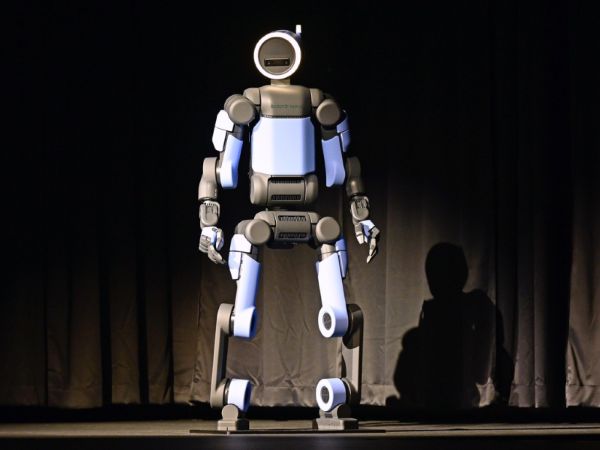
Hyundai Motor is considering selling humanoid robots and robot dogs through its existing car dealership network.
On Aug. 26, Business Insider reported that Hyundai Motor CEO Jose Munoz (호세 무뇨스) raised the possibility of distributing robots through dealer partners at an investor event.
"There is existing distribution potential to sell robots through dealer partners," he said. Hyundai Motor is also examining whether similar financing support can be provided for robots through Hyundai Capital, which has handled auto financing. The company is reviewing whether its sales network and financing system can be linked to its robotics business.
The idea is an extension of the robotics business Hyundai Motor has prepared for years. Hyundai Motor Group secured an 80% stake in Boston Dynamics in 2021. At the time, Boston Dynamics was valued at $1.1 billion, or about 1.52 trillion won.
Products Hyundai Motor is currently using include Boston Dynamics' four-legged robot Spot and its logistics robot Stretch. Spot is being deployed for industrial-site inspections and predictive maintenance. Hyundai Motor has previously said it would also use Spot for vehicle exterior inspections at the welding plant at the Georgia Metaplant. The plant produces the electric vehicles Ioniq 5 and Ioniq 9.
The next step is the humanoid robot Atlas. Jose Munoz said Hyundai Motor would soon begin mass production of Atlas. Boston Dynamics also released a video in May showing Atlas squatting down to lift a mini refrigerator and carry it to an engineer. Atlas is designed to rotate its torso 180 degrees.
Competition to introduce robots in the auto industry is already in full swing. Figure AI's robots are moving and sorting heavy auto parts at BMW's assembly plant in Spartanburg, South Carolina. Agility Robotics has signed a deal to supply humanoids to Toyota's production plant in Canada. Apptronik's Apollo robot is also helping with parts delivery and inspection work at a Mercedes plant.
Tesla is also developing the humanoid robot Optimus. Elon Musk has mentioned that Optimus could eventually work in factories and homes. Tesla is installing its first Optimus production line at its Fremont, California, plant. The plant previously produced the Model S and Model X.
Still, the consumer robot market remains at an early stage. 1X is taking deposits for its home robot NEO and has set an ownership price of $20,000, or about 28 million won. The company said its first deliveries in the United States would begin this year. China's Unitree is also selling humanoids online. Its G1 costs $13,500, or about 19 million won, and its R1 costs $4,900, or about 6.8 million won. The main buyers of these robots are researchers and developers, schools and hobby users.
The task for Hyundai Motor and Boston Dynamics is to set their actual buyer base. For now, it has not been confirmed whether Jose Munoz's remarks were aimed at individual consumers, corporate customers, or both markets. Hyundai Motor has also not given a direct answer on the matter.
 Seungah Yoo
ysah@d-today.co.kr
Seungah Yoo
ysah@d-today.co.kr