
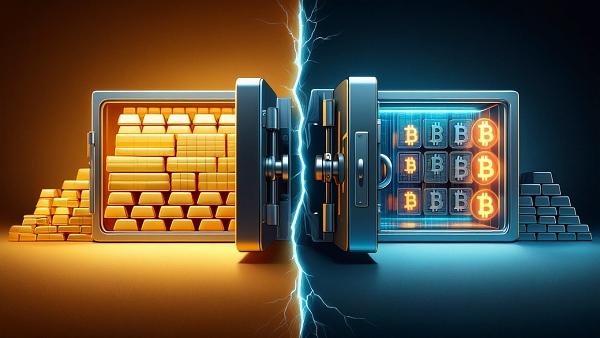
A survey found that describing bitcoin as “digital gold” does not resonate with the U.S. public.
Blockchain outlet Cryptopolitan reported on Aug. 25 that the Bitcoin Policy Institute (BPI) said messages emphasising storytelling and trust drew the highest interest among bitcoin marketing strategies.
BPI conducted the research in three stages from March to June 2026 with polling firm Cygnal and Neighborhood Bitcoin. In the first stage, it surveyed 1,516 registered voters aged 18 to 64. The largest share, 32 percent, said they were interested in bitcoin but were delaying a purchase. About 30 percent said they rejected it for ideological reasons, and about 20 percent said they were not interested due to financial problems. Active supporters were the smallest group at 18 percent.
In the second stage, it ran eight focus groups with about 80 people who did not own bitcoin but were likely to buy it. The survey was conducted in Columbus, Ohio, and Nashville, Tennessee, and each session lasted about 95 minutes. In the third and final stage, it carried out message testing on 1,000 registered voters from May 29 to June 2.
Respondents said the most important factor related to bitcoin was control. Proven performance, security, accessibility and ease of use followed. Phrases such as “I decide how much to invest” or “I can track transactions myself” left the strongest impressions.
The phrase “free money”, described as a way to save that banks or governments cannot freeze or erode through inflation, also drew a positive response. By contrast, the “digital gold” narrative was not rated an effective slogan.
Who provides information about bitcoin was also cited as an important variable. Potential buyers preferred explanations from ordinary people with real ownership experience, such as friends, family and financial professionals, over corporate promotional language. This pattern was confirmed across the survey and all eight focus groups.
The research also found an effect from exposure to messages. After respondents saw 19 test phrases, the share saying they had “no interest at all” in buying bitcoin fell to 32 percent from 39 percent. The share saying they were “very interested” rose to 24 percent from 19 percent. The BPI survey showed that bitcoin adoption is influenced less by the asset’s nature itself than by what narratives are used and which trust channels deliver them.
A separate study released by the Cleveland Federal Reserve Bank in July 2026 also pointed to a similar trend. The paper analysed cryptocurrency holdings per wave among 15,000 to 25,000 households, based on Nielsen Homescan panel survey data from 2018 to 2025.
The paper said expected bitcoin returns had a bigger effect on explaining whether people held it than all demographic variables combined. In the 2021 case, holders expected an annual return of 22 percent, while non-holders expected only 7 percent. In a 2025 experiment, a group told that the previous year’s bitcoin return was 14.3 percent increased its planned cryptocurrency investment by about 47 percent compared with a control group that did not receive the information. In subsequent survey waves, it was also about 23 percent more likely to buy cryptocurrency.
The share of U.S. households holding cryptocurrency rose to about 12 percent in 2025 from less than 2 percent in 2018. As a result, in the phase of bitcoin adoption, attention is expected to remain on whether a sense of control, recognition of performance and experiences shared by people around them act as variables closer to converting interest into actual purchases than abstract metaphors such as “digital gold”.
 Yoonseo Lee
yslee@d-today.co.kr
Yoonseo Lee
yslee@d-today.co.kr