
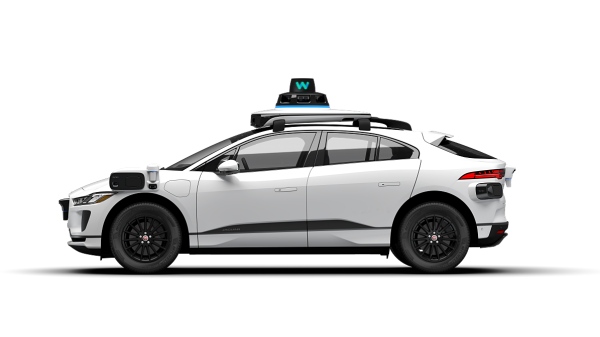
[DigitalToday reporter Jinju Hong] Waymo unveiled a custom semiconductor built on a 5-nanometre process for its robotaxis and its in-vehicle computing architecture. It is designing core computing functions needed for autonomous driving while working with outside companies for key hardware.
On Aug. 20 local time, Decrypt reported that Waymo said it uses its custom application-specific integrated circuit (ASIC) to process in real time data coming from cameras, lidar and radar and deliver it to its artificial intelligence system. The chip can handle 1,000 trillion operations per second.
The disclosure also confirmed that Waymo is directly designing sensor data processing and fusion, which are central to autonomous driving. Waymo believes closer integration of hardware and software can improve latency and efficiency, and it is focusing engineering resources on real-time sensor fusion and front-end machine learning.
Waymo is not developing the entire in-vehicle computing system in-house. AMD, Micron, Nvidia, Samsung Electronics, SanDisk, Socionext and TSMC are among hardware suppliers taking part. Waymo explained it combines its own chips with outside companies' CPUs, GPUs, accelerators, memory and storage devices by task.
The participation of those companies does not immediately mean large new orders or higher revenue. Waymo did not disclose which parts each company supplies, the contract size or expected purchase volumes. It is therefore difficult to estimate the impact on any chipmaker's results based on this announcement alone.
The in-vehicle computing system focuses on responsiveness, durability and redundancy. Because the autonomous driving system must process sensor information in milliseconds, it has to withstand road vibration, extreme temperatures and long operating conditions. The system was made smaller to fit inside the vehicle and designed so noise is not passed on to passengers. Multiple computers operate in parallel so a backup system can take over if a problem occurs in the main computer.
Waymo said it has increased onboard computing performance in vehicles by 20 times over the past 8 years. Much of model training and simulation is still done in data centres, but immediate decisions during actual driving are handled inside the vehicle. That is because sending sensor data to the cloud could make real-time responses difficult due to network delays or connection problems.
Waymo's strategy is close to directly controlling areas where differentiation is needed in autonomous driving technology while not developing all processors and memory itself. In its latest sixth-generation driver system, it simplified the sensor configuration and shifted more processing to custom chips. It aims to reduce hardware complexity and costs while maintaining multiple sensing methods.
The sixth-generation system is set to be applied to multiple vehicle platforms. The purpose-built robotaxi Ojai is scheduled to be the first vehicle to use it, and it was designed to be integrated into Hyundai Motor's Ioniq 5.
Waymo is also pushing to scale up production. It is pursuing a plan to secure capacity at its plant in Mesa, Arizona, to integrate tens of thousands of autonomous vehicles a year. This is potential capacity, not current output.
Waymo currently operates about 4,000 vehicles in more than 10 cities and handles about 500,000 paid rides a week. The Ojai vehicle will initially be offered to some users in San Francisco, Phoenix and Los Angeles before expanding to other markets.
In the end, the key is expanding the number of robotaxis. As the fleet grows, demand for onboard computing hardware needed per vehicle could also increase. For now, because the parts mix, unit prices and procurement commitments have not been disclosed, it is not confirmed how much any of AMD, Nvidia, Micron, Samsung Electronics, SanDisk, Socionext and TSMC will benefit.
 Jinju Hong
hongjj@d-today.co.kr
Jinju Hong
hongjj@d-today.co.kr